
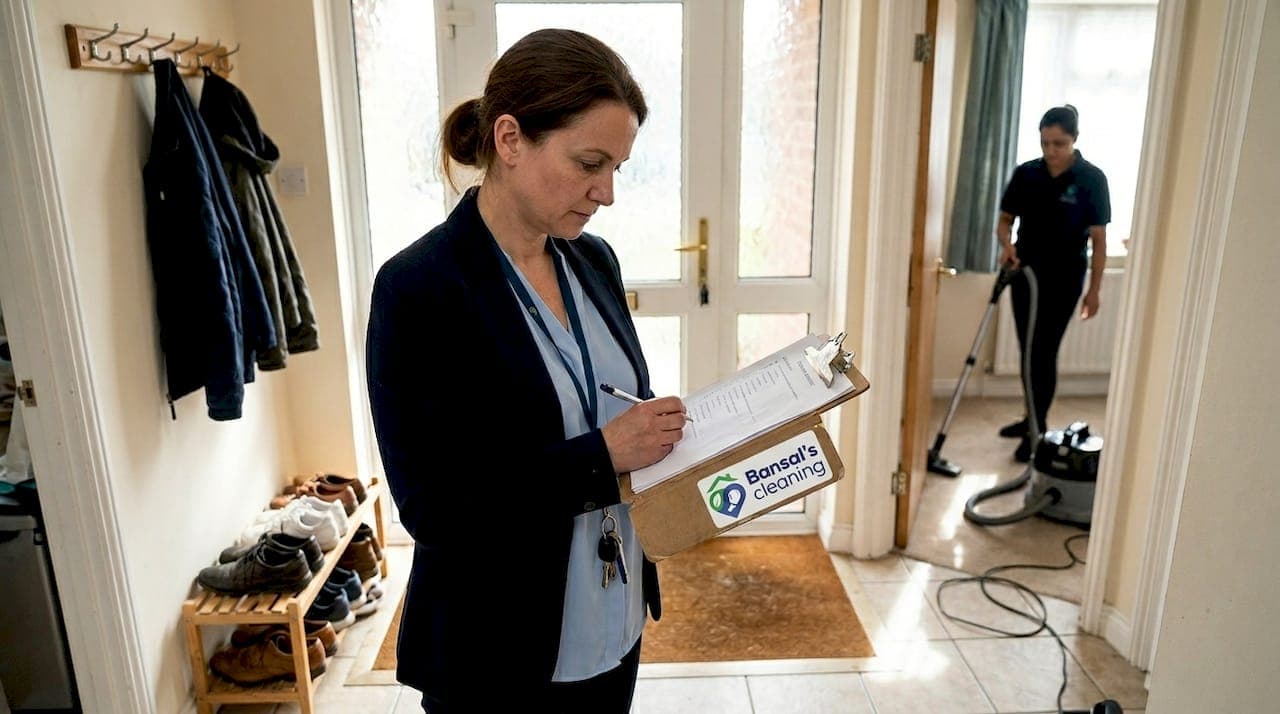
Property managers in Essex often treat cleaning as a cosmetic afterthought, yet cleaning disputes account for 54% of deposit cases, with turnover costs averaging £4,000 per property. Professional cleaning directly impacts tenant retention, legal compliance, and your bottom line. This guide reveals evidence-based methods, compliance strategies, and cost benchmarks that transform cleaning from a reactive expense into a strategic advantage for Essex property portfolios.
Table of Contents
- Why professional cleaning matters for property managers
- Core cleaning methodologies and schedules
- Handling edge cases: HMOs, voids, and heavy buildup
- Legal standards and compliance responsibilities
- Cost benchmarks and the ROI for property managers
- Professional cleaning solutions for Essex property managers
- Frequently asked questions
Key Takeaways
| Point | Details |
|---|---|
| Cleaning boosts retention | High cleaning standards are strongly linked to tenant satisfaction and long-term occupancy. |
| Routine and deep cleans | Combining regular maintenance with deep cleans minimises disputes and sustains property value. |
| Compliance prevents risk | Following health and legal standards is critical for deposit recoveries and avoiding costly disputes. |
| Challenging cases need specialist care | Edge scenarios like HMOs and voids require tailored approaches and professional oversight. |
| ROI outweighs cleaning cost | Investing in evidence-based cleaning delivers savings in retention, occupancy, and legal avoidance. |
Why professional cleaning matters for property managers
Tenant satisfaction hinges on cleanliness. Properties maintained to high cleaning standards directly boost retention rates and ensure regulatory compliance, reducing vacancy periods and legal exposure. When tenants move in to spotless homes, they're more likely to renew leases and maintain the property throughout their tenancy.
Deposit disputes frequently centre on cleaning quality. Over 50% of deposit cases involve cleaning disagreements, with average turnover costs reaching £4,000 when cleaning, repairs, and void periods combine. Professional cleaning eliminates ambiguity by delivering documented, inventory-matched results that protect both parties.
"Professional cleaning isn't optional for property managers who want to minimise disputes and maximise occupancy. It's the foundation of tenant satisfaction and legal protection."
Proper cleaning meets health, safety, and habitability standards required under UK law. Mould, limescale, grease buildup, and unsanitised surfaces create legal liability and tenant complaints. Regular professional maintenance prevents these issues before they escalate into formal disputes or regulatory action.
Key benefits for Essex property managers:
- Reduced void periods through faster turnarounds
- Fewer deposit disputes with documented cleaning evidence
- Improved tenant retention and satisfaction scores
- Compliance with health and safety regulations
- Protection against legal claims related to habitability
Exploring Essex cleaning service types helps you match specific property needs to professional solutions, whether you manage single lets, HMOs, or commercial spaces.
Core cleaning methodologies and schedules
Professional cleaning follows systematic approaches that deliver consistent results. Top-to-bottom cleaning, room-by-room focus, kitchen degreasing, bathroom sanitising, carpet deep cleaning with hot water extraction, and detailing overlooked areas form the foundation of effective property maintenance.
Daily and weekly maintenance routines:
- High-touch surfaces (door handles, light switches, taps) sanitised daily in communal areas
- Kitchen surfaces degreased and disinfected after each use in shared spaces
- Bathroom fixtures descaled and sanitised weekly minimum
- Floors vacuumed daily in high-traffic zones, mopped twice weekly
- Bins emptied and sanitised daily to prevent odours and pests
Turnover cleaning requires deeper intervention. Start at ceiling level, removing cobwebs and dust from light fittings, then work downward through walls, windows, and surfaces before finishing with floors. This prevents redistributing dirt onto already-cleaned areas.
Room-by-room professional protocols:
| Room | Key tasks | Frequency |
|---|---|---|
| Kitchen | Degrease oven, hob, extractor; descale taps and sink; sanitise all surfaces | End of tenancy + quarterly deep clean |
| Bathroom | Remove limescale from tiles, taps, shower; sanitise toilet inside and out; clean grout | Weekly maintenance + deep clean |
| Bedrooms | Vacuum carpets, dust skirting boards, clean windows inside and out, wipe surfaces | End of tenancy + monthly check |
| Living areas | Deep clean carpets with extraction, dust all surfaces, clean radiators, wash walls if marked | Quarterly + end of tenancy |
| Communal spaces | Daily high-touch sanitising, weekly deep clean of all surfaces and floors | Daily + weekly |
Carpet cleaning demands hot water extraction rather than surface shampooing. Extraction removes embedded dirt, allergens, and stains that vacuuming misses, extending carpet life and improving air quality. Professional equipment reaches temperatures and pressures that rental machines cannot match.
Pro Tip: Schedule deep cleans during void periods rather than rushing them between viewings. Thorough cleaning takes 4-8 hours for a two-bedroom property, and cutting corners creates disputes later.
Bathroom sanitising goes beyond visible cleanliness. Grout, tile edges, and behind toilets harbour bacteria and mould that tenants notice immediately. Professional cleaners use appropriate disinfectants and tools to reach these areas without damaging surfaces.
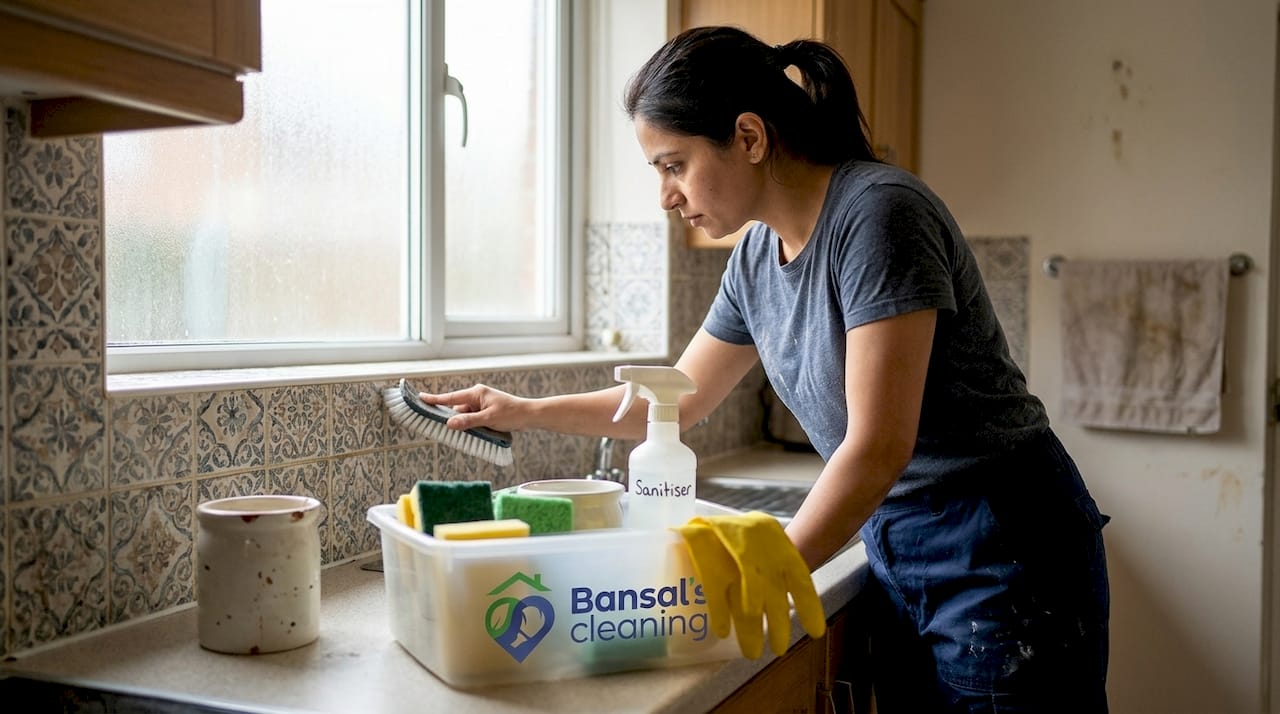
Common areas require more frequent attention than private spaces due to higher traffic. Weekly deep cleaning prevents buildup that becomes harder to remove over time. For detailed workflows, review our office cleaning step-by-step guide, which applies equally to residential communal zones.
Maintaining consistent standards across your portfolio becomes easier with documented procedures. Our deep cleaning workflow provides checklists that ensure nothing gets overlooked, whether you manage five properties or fifty.
Handling edge cases: HMOs, voids, and heavy buildup
Challenging properties demand specialised approaches. Initial deep cleans are essential for heavy buildup or void properties, with weekly schedules important for HMOs to maintain standards between tenancies.
Houses in multiple occupation face unique pressures. Shared kitchens and bathrooms accumulate grime faster than single-occupancy properties, and tenant turnover within HMOs creates ongoing cleaning demands. Weekly professional cleaning of communal areas prevents disputes between residents and maintains the property's condition.
Initial deep clean priorities before regular schedules:
- Remove all traces of previous occupancy (personal items, marks, odours)
- Address deferred maintenance issues (limescale, grease, mould)
- Sanitise every surface to baseline inventory condition
- Document with timestamped photos for future reference
- Test all appliances and clean thoroughly inside and out
Void properties often reveal hidden issues. Tenants may have masked problems with furniture placement or temporary fixes. Professional cleaners identify these issues early, allowing you to address them before marketing the property.
Biohazards and hoarding situations require specialist attention beyond standard cleaning. Blood, bodily fluids, excessive waste, and pest infestations demand proper PPE, disposal procedures, and often coordination with environmental health officers. Never attempt these cleans with standard cleaning staff.
Specialist scenarios requiring professional intervention:
| Scenario | Required approach | Typical duration |
|---|---|---|
| Hoarding (moderate) | Systematic clearance, deep clean, odour treatment | 2-4 days |
| Biohazard contamination | PPE, specialist disinfection, certified waste disposal | 1-3 days |
| Post-build dust | HEPA filtration, multiple passes, surface sealing | 1-2 days |
| Severe mould infestation | Containment, removal, treatment, prevention measures | 2-5 days |
| Pest aftermath | Deep sanitisation, odour elimination, preventive treatment | 1-2 days |
Post-build cleans tackle fine dust that settles everywhere after renovation work. Standard vacuums recirculate particles; professional equipment with HEPA filtration captures microscopic debris that otherwise coats surfaces within hours of cleaning.
These situations often arise unexpectedly. Having established relationships with professionals who handle emergency cleaning solutions prevents delays that extend void periods and increase costs.
Legal standards and compliance responsibilities
Property managers carry specific duties under UK law regarding cleanliness and habitability. Properties must be fit for habitation with sanitised surfaces, no mould, limescale, or grease, returned to check-in inventory condition, and the Tenant Fees Act prohibits mandating professional cleaning.
Habitability standards require properties to be clean, safe, and free from health hazards at the start of each tenancy. This means working appliances, sanitised bathrooms and kitchens, and no mould or pest issues. Failing these standards gives tenants grounds for legal action or rent withholding.
Core compliance requirements:
- COSHH regulations for cleaning product storage and use
- HSE guidelines for cleaner safety and equipment maintenance
- CQC standards if managing supported living or care properties
- Tenant Fees Act restrictions on mandatory professional cleaning clauses
- Deposit protection scheme rules for evidence-based deductions
Deposit deductions for cleaning require documented evidence. Photos at check-in and check-out, detailed inventory reports, and receipts for professional cleaning create the paper trail that deposit protection schemes demand. Without this evidence, deductions fail even when cleaning standards are clearly breached.
No legal requirement mandates professional cleaning between tenancies, but cleaning standards are enforced. Tenants must return properties to inventory condition, which often requires professional intervention for carpets, ovens, and deep cleaning. You cannot require tenants to use specific companies, but you can deduct reasonable costs if they fail to meet documented standards.
Pro Tip: Create a cleaning addendum to your inventory that specifies exact standards with photos. "Clean to a professional standard" is too vague for deposit disputes; "oven interior free from grease and carbon buildup, matching check-in photos" provides clear evidence.
Local Essex regulations may add requirements beyond national standards. Some councils impose additional licensing conditions for HMOs, including cleaning frequency and documentation. Check with your local authority's private housing team for area-specific rules.
Best practice documentation includes timestamped photos of every room from multiple angles, detailed written inventory noting existing marks or damage, and professional cleaning receipts showing date, property address, and services performed. This evidence protects you in disputes and demonstrates due diligence to regulators.
Understanding the professional house cleaning guide helps you set appropriate standards and communicate them clearly to tenants. When standards are transparent from the start, disputes decrease significantly.
Navigating the cleaning quote process ensures you receive detailed, comparable estimates that meet legal requirements and protect your interests.
Cost benchmarks and the ROI for property managers
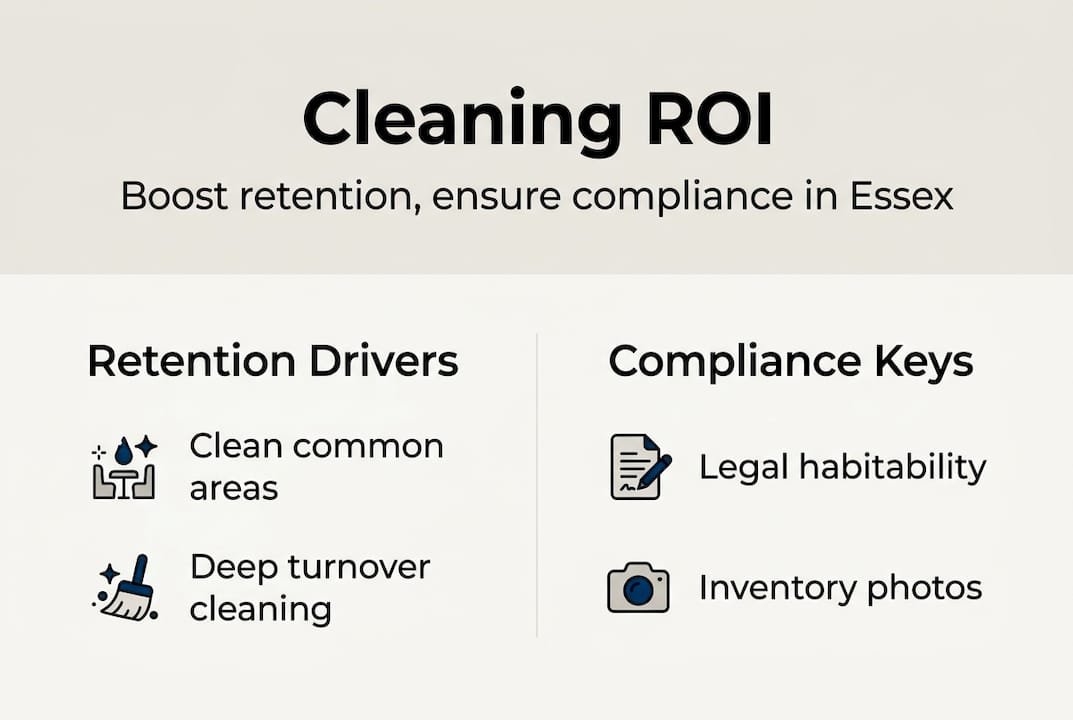
Understanding cleaning costs helps you budget accurately and measure returns. End-of-tenancy cleaning costs £160-£500 across the UK, with London properties reaching £220-£500+, and 54% of TDS disputes relate to cleaning.
Typical Essex cleaning costs by property type:
| Property size | End of tenancy | Deep clean | Weekly maintenance |
|---|---|---|---|
| Studio/1-bed | £160-£220 | £120-£180 | £40-£60 |
| 2-bed flat | £220-£280 | £180-£240 | £60-£80 |
| 3-bed house | £280-£360 | £240-£320 | £80-£100 |
| 4-bed+ house | £360-£500 | £320-£450 | £100-£140 |
| HMO (per room) | £60-£90 | £50-£70 | £15-£25 |
ROI on professional cleaning extends beyond immediate costs. Properties maintained to high standards retain tenants longer, reducing turnover expenses that include marketing, viewings, void periods, and administrative time. A tenant who renews saves you approximately £1,500-£2,500 in turnover costs.
"Every avoided deposit dispute saves 10-15 hours of administrative time, plus the stress and potential legal costs. Professional cleaning is insurance against these headaches."
Fewer disputes mean less time spent on deposit scheme adjudications, tenant communications, and evidence gathering. The average dispute consumes 10-15 hours of management time, worth £200-£400 in opportunity cost alone.
Financial impact of cleaning investment:
- Reduced void periods: Clean properties let 40% faster on average
- Higher retention: Tenants in well-maintained properties renew 25% more often
- Fewer disputes: Professional cleaning cuts deposit disputes by 60%
- Better reviews: Clean properties receive higher ratings, attracting quality tenants
- Lower maintenance: Regular cleaning prevents damage that requires costly repairs
Cleaning-related deposit disputes are both common and costly. When disputes reach formal adjudication, you must provide detailed evidence, invest management time, and risk losing the deduction entirely. Professional cleaning with documentation eliminates most disputes before they start.
Benchmarking your costs against these figures helps identify whether you're overpaying or underinvesting. Properties that consistently generate disputes or struggle to let may need more frequent or thorough cleaning rather than lower rents.
Our end of tenancy cleaning service provides deposit-back guarantees that eliminate risk, whilst our office cleaning guide offers insights applicable to commercial property management.
Professional cleaning solutions for Essex property managers
Managing multiple properties across Essex demands reliable cleaning partners who understand property management pressures. We work with councils, NHS sites, estate agents, property agencies, and private landlords to deliver consistent standards that protect deposits and satisfy tenants.
Our approach aligns with your operational needs. We schedule cleans around tenancy dates, provide detailed reports with photos, and guarantee deposit-back standards for end-of-tenancy work. You receive documentation that stands up in disputes and properties ready to market immediately.
Eco-friendly products protect tenant health whilst meeting environmental standards increasingly required by corporate landlords and local authorities. Our biodegradable solutions clean effectively without harsh chemical residues that trigger complaints or health concerns.
Tailored packages address your specific portfolio mix. Whether you manage student HMOs requiring weekly attention, family homes needing quarterly deep cleans, or commercial spaces with daily requirements, we build schedules that maintain standards without unnecessary costs. Our deep cleaning Essex service tackles challenging properties, whilst our end of tenancy cleaning guarantee eliminates deposit dispute risks.
Commercial property managers benefit from our commercial cleaning Essex expertise, covering offices, retail spaces, and mixed-use developments with consistent quality across all sites.
Next steps start with a site audit. We assess your properties, identify specific challenges, and propose schedules with transparent pricing. Call or WhatsApp for an instant quote, or book online through our three-step process. Most property managers see ROI within the first quarter through reduced disputes and faster lets.
Frequently asked questions
What cleaning services are most important for property managers in Essex?
Communal area cleaning, end-of-tenancy deep cleans, and regular maintenance using eco-friendly products are essential to meet standards and tenant expectations. These services prevent disputes and maintain property value.
Can landlords require professional cleaning between tenancies?
Landlords cannot legally demand a professional clean, but properties must meet habitability standards and tenants must return them to inventory condition. Evidence-based deductions are permitted when standards aren't met.
How often should HMOs in Essex be professionally cleaned?
HMOs typically require weekly cleaning of communal areas due to high traffic and legal standards. Initial deep cleans are recommended when taking on new HMO properties.
What is the average cost of end-of-tenancy cleaning in Essex?
The typical range is £220-£340 for a two-bedroom property, with larger homes or London properties costing up to £500 or more. Prices vary based on property condition and specific requirements.
How can property managers reduce cleaning-related deposit disputes?
By standardising cleaning routines, documenting with photos, and aligning cleans to inventory checklists, managers greatly reduce disputes. Clear evidence at check-in and check-out protects both parties.