
TL;DR:
- Emergency cleaning responds quickly to health and safety threats like floods, sewage, and mould.
- Delaying professional cleaning increases costs and health risks, often requiring extensive repairs.
- Choose licensed, insured experts promptly to ensure proper cleanup, documentation, and minimized long-term damage.
A burst pipe at midnight. A sudden call from your estate agent saying an inspection is tomorrow morning. An accident that leaves your living room needing more than a mop and bucket. Most Essex homeowners only discover how serious these situations are when they are already in the thick of them. Mould can grow within 24-48 hours of water damage, turning a manageable problem into a health hazard before you have even called a plumber. This guide explains what emergency cleaning actually means, when you need it, what it costs, and how to choose the right provider in Essex before the situation spirals out of control.
Table of Contents
- What makes a cleaning need an emergency?
- Health risks and hidden costs of delayed emergency cleaning
- Why professional emergency cleaning beats DIY
- Practical tips: Choosing an emergency cleaning provider in Essex
- A reality check: What most Essex homeowners miss about emergency cleaning
- Need fast emergency cleaning? Trusted Essex experts are ready
- Frequently asked questions
Key Takeaways
| Point | Details |
|---|---|
| Urgency is critical | Tackling emergencies in under 48 hours dramatically reduces health and cost risks for Essex homeowners. |
| Professional cleaning saves time | Experts complete thorough emergency clean-ups in less than half the time of DIY methods. |
| Delayed cleaning is costly | Postponing emergency cleaning leads to higher bills and often noncompliance with insurance or tenancy requirements. |
| Choose certified providers | Always verify credentials and get a clear quote when hiring emergency cleaners in Essex. |
What makes a cleaning need an emergency?
Not every messy situation qualifies as an emergency clean. Standard domestic cleaning handles routine dirt, dust, and grime on a scheduled basis. Emergency cleaning is a completely different category. It involves rapid response to situations that pose immediate risks to health, safety, or property value, and it requires specialist equipment, training, and often regulated waste disposal.
Think about the difference this way: a regular cleaner tidies your home on a Tuesday morning. An emergency cleaner arrives at 11pm on a Sunday because raw sewage has backed up into your bathroom, or because a family member has had a serious accident. The stakes, the tools, and the urgency are not even in the same league.
Common triggers for emergency cleaning in Essex homes include:
- Burst pipes and flooding that saturate floors, walls, and furniture
- Sewage or drain overflow inside the property
- Sudden landlord or estate agent inspections with little notice
- Trauma incidents involving body fluids or biohazards
- Animal waste contamination, particularly in hoarding situations
- Rapid mould growth following leaks or condensation problems
- Post-accident cleanups after fires, vehicle incidents, or industrial spills
Each of these scenarios demands a response that goes well beyond what a standard domestic cleaner is equipped or insured to handle. You can read more about Essex emergency cleaning scenarios to understand the full range of situations that qualify.
Key timing fact: Mould starts growing within 24-48 hours after water damage. What looks like a damp patch on Monday can become a respiratory hazard by Wednesday.
Speed is the defining factor. Every hour you wait after a flood, a sewage leak, or a biohazard incident, the damage compounds. Surfaces absorb contamination more deeply. Mould spores spread. Odours set into soft furnishings. What could have been resolved in a few hours becomes a multi-day remediation project.
Health risks and hidden costs of delayed emergency cleaning
Delaying emergency cleaning is rarely a money-saving decision. It almost always costs more in the end, both financially and physically.
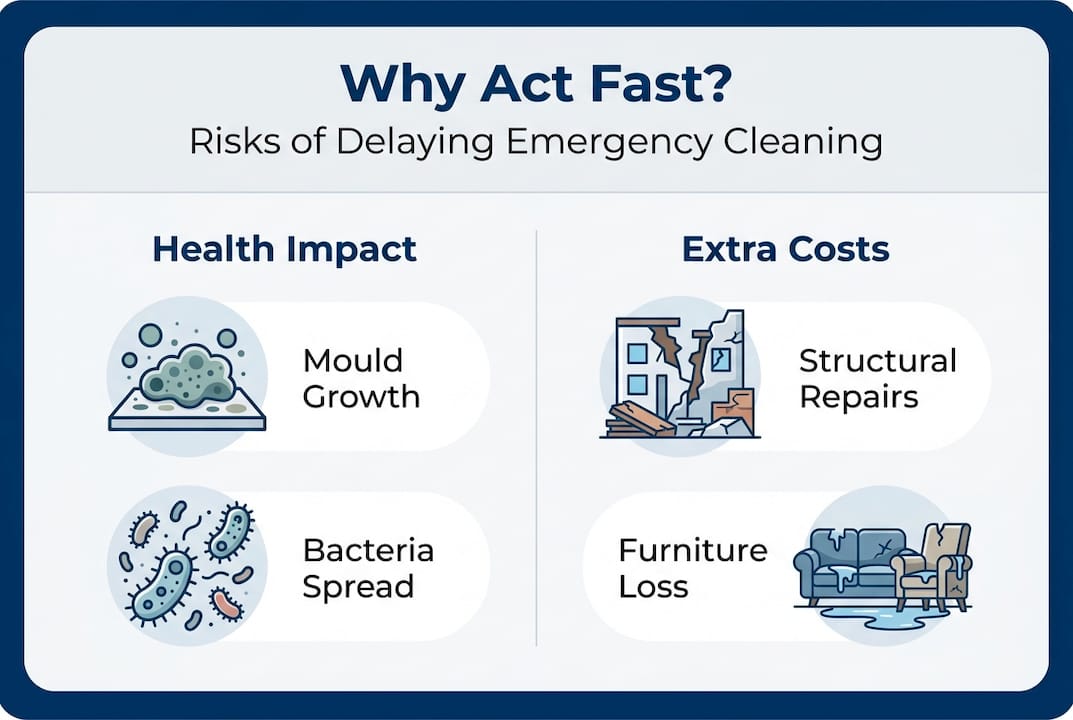
From a health perspective, the risks escalate quickly. Contaminated water left standing breeds bacteria. Mould spores become airborne and aggravate respiratory conditions. Biohazard material that is not properly contained and disposed of can spread pathogens to other areas of the property. The people most at risk are children, elderly residents, and anyone with asthma or a compromised immune system.
Health conditions that worsen with delayed emergency cleaning include:
- Asthma and other respiratory conditions triggered by mould spores
- Skin infections from contact with contaminated surfaces
- Gastrointestinal illness from sewage or animal waste exposure
- Allergic reactions to dust mites and biological contaminants
- Long-term lung damage from prolonged mould exposure
The financial picture is equally sobering. Biohazard clean-ups cost between £1,000 and £10,000+ depending on severity and timing. Acting fast keeps you at the lower end of that range. Waiting pushes you towards the higher end.
| Scenario | Immediate response | Delayed response |
|---|---|---|
| Minor water leak | £1,000-£2,500 | £3,000-£6,000+ |
| Sewage overflow | £2,500-£4,000 | £5,000-£10,000+ |
| Biohazard incident | £1,500-£3,000 | £4,000-£10,000+ |
| Mould remediation | £500-£1,500 | £2,000-£5,000+ |
Beyond the direct cleaning bill, delayed action creates knock-on costs: structural repairs, replacement furniture, medical expenses, and potential loss of tenancy deposit. Understanding the Essex cleaning quote process before an emergency happens means you are not making financial decisions under pressure when the crisis arrives.
The uncomfortable truth is that most homeowners underestimate how fast a contained incident becomes a widespread problem. A single damp wall, left for a week, can require full replastering. A small sewage leak, not professionally sanitised, can render a room unusable for months.
Why professional emergency cleaning beats DIY
The instinct to handle things yourself is understandable. You want to save money, you feel in control, and the problem is right in front of you. But DIY emergency cleaning carries serious risks that most homeowners do not anticipate until the damage is already done.
Professionals complete work in 2-3 hours that would take the average homeowner 6-8 hours, and that is before accounting for the fact that a professional's result is actually thorough. DIY often leaves behind hidden contamination that is not visible to the naked eye but continues to cause problems for months.
| Task | Professional time | DIY time |
|---|---|---|
| Post-flood drying and sanitising | 3-4 hours | 10-16 hours |
| Sewage decontamination | 2-3 hours | 8-12 hours (if achievable at all) |
| Biohazard removal | 1-3 hours | Not recommended |
| Pre-inspection deep clean | 2-4 hours | 6-10 hours |
Here is what only a professional emergency cleaning service can reliably handle:
- Biohazard safety compliance including proper PPE, containment, and regulated disposal of hazardous waste
- Industrial drying equipment that removes moisture from within walls and subfloors, not just surface level
- Insurance-grade documentation including written reports, photographs, and certificates of completion
- Specialist sanitising agents that neutralise pathogens rather than masking them
- Structural assessment to identify areas that need further remediation beyond cleaning
The deep cleaning efficacy of professional-grade equipment is simply not replicable with household products. Similarly, the appliance cleaning time savings from professional methods demonstrate how dramatically faster and more effective trained technicians are across all cleaning scenarios. For context, emergency plumbing response follows a similar logic: you would not attempt to fix a burst main yourself, so why tackle the aftermath without professional help?
Pro Tip: Always request written documentation from your emergency cleaning provider. This is essential for insurance claims and, if you are a tenant, for protecting your deposit against disputed damage.
Practical tips: Choosing an emergency cleaning provider in Essex
Not all emergency cleaning companies are equal. In a crisis, it is tempting to call the first number you find. Taking five minutes to ask the right questions can save you thousands of pounds and a great deal of stress.
Here is how to choose a trustworthy Essex emergency cleaner:
- Check certification and insurance. Confirm the company holds public liability insurance and relevant biohazard or waste disposal licences. Ask specifically about their compliance with Environment Agency regulations for hazardous waste.
- Read recent reviews. Look for reviews that mention emergency response specifically, not just general cleaning quality. Speed, professionalism under pressure, and clear communication matter most in a crisis.
- Confirm their response time. A genuine emergency cleaning provider should be able to give you a realistic arrival window, often within a few hours for urgent situations in Essex.
- Ask about the quote process. A reputable company will provide a clear breakdown before work begins. Use the property cleaning provider checklist to know exactly what questions to ask.
- Clarify waste disposal methods. Biohazard and contaminated waste must be disposed of through licensed channels. If a company is vague about this, that is a red flag.
Emergency cleaning cost factors include area size, timing, waste disposal requirements, and severity of contamination. Getting a detailed written quote protects you from unexpected charges once the job is done.
While you wait for the team to arrive, here is what to do: keep everyone away from the affected area, ventilate the space if it is safe to open windows, remove pets and vulnerable people from the property, and avoid touching contaminated surfaces. If the situation involves a drainage issue, the emergency drainage process should be initiated simultaneously so both problems are addressed together.
Pro Tip: Ask for an itemised quote rather than a single total figure. This makes it far easier to submit a claim to your insurer and ensures there are no surprise charges added after the work is complete.
A reality check: What most Essex homeowners miss about emergency cleaning
Here is the honest truth that most guides skip over. The biggest mistake Essex homeowners make is not choosing the wrong cleaner. It is waiting too long to call anyone at all.
We see this pattern regularly. A homeowner delays because they are worried about the cost, or they assume the situation is manageable. By the time they call, what would have been a straightforward job has become a complex remediation project with legal and insurance complications layered on top.
DIY attempts or unlicensed providers create a second problem: documentation gaps. Insurers increasingly require proof that licensed professionals handled biohazard or flood remediation. Without it, claims get rejected. Deposits get withheld. Landlords face compliance issues with local authorities.
The cleaning impact on property management is significant and often underestimated. A fast, professional response after an emergency does not just fix the immediate problem. It protects the property's long-term value, keeps insurance claims valid, and prevents the kind of secondary damage that turns a one-off crisis into an ongoing headache.
Our honest advice: have a plan before you need one. Know which provider you would call. Know roughly what it costs. That 10 minutes of preparation is worth more than any amount of frantic searching at 2am with water coming through your ceiling.
Need fast emergency cleaning? Trusted Essex experts are ready
When an emergency strikes your Essex home, every minute counts. Bansal's Cleaning provides rapid-response emergency cleaning across Essex, with trained technicians who arrive prepared, work efficiently, and leave your property safe and compliant.

Whether you need a same-day response after an accident, a thorough Essex end of tenancy cleaning before a final inspection, or ongoing domestic cleaning benefits to keep your home in top condition, we are here to help. We also offer specialist upholstery and carpet cleaning to restore soft furnishings after water or contamination damage. Call or WhatsApp us for an instant quote and get expert help on its way to you today.
Frequently asked questions
How quickly should I arrange emergency cleaning after a water leak or accident?
You should arrange emergency cleaning within 24-48 hours to avoid dangerous mould growth and worsening property damage. Acting within the first few hours gives you the best chance of limiting both health risks and repair costs.
What determines the price of emergency cleaning in Essex homes?
Costs depend on the type of incident, area size, timing, and waste disposal requirements. Minor biohazard clean-ups start from £1,000, rising to £10,000 or more for extensive incidents left unaddressed.
Is it safe to clean up after an emergency myself?
DIY often misses hidden contamination and may not meet insurance or safety standards. Professionals complete in 2-3 hours what DIY attempts take 6-8 hours, with far more reliable results.
Will my insurance cover emergency cleaning services?
Many home insurance policies cover emergency cleaning when carried out by licensed professionals. Always check your policy wording and request written documentation from your cleaning provider to support any claim.
What should I do before the emergency cleaners arrive?
Keep everyone away from the affected area, ventilate if it is safe to do so, and remove pets and vulnerable people from harm. Follow any specific instructions your provider gives you when you call.