
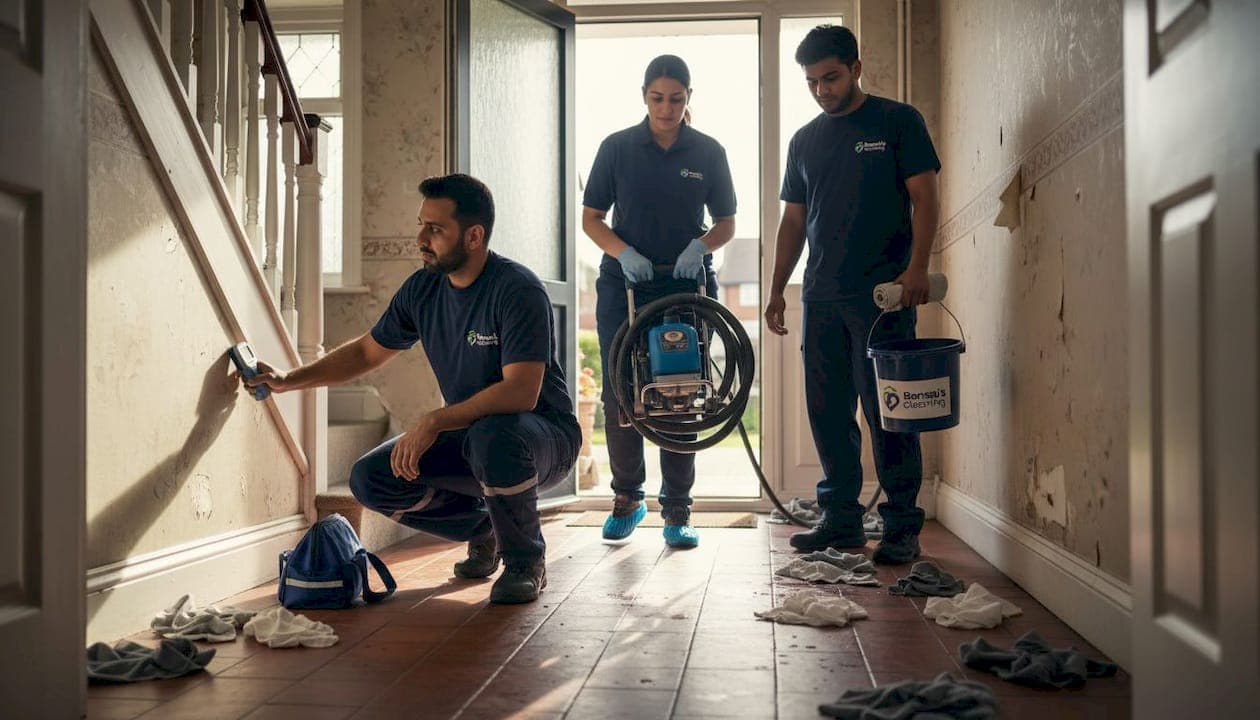
Many people believe that emergency cleaning can wait a few hours or even overnight without serious consequences. This dangerous misconception leads property owners to delay professional help, allowing contamination to spread and damage to worsen. Emergency cleaning services in Essex provide immediate 24/7 response for critical situations like water damage, fire residue, sewage backups, and biohazards. Professional teams arrive within 1-2 hours, equipped with specialised protocols to protect your health, preserve your property, and prevent secondary damage. This guide reveals everything Essex homeowners, tenants, landlords, and businesses need to know about rapid emergency cleaning solutions.
Table of Contents
- Key takeaways
- Understanding emergency cleaning services in Essex
- Core protocols and safety standards for emergency cleaning
- Timelines, costs and insurance for emergency cleaning
- Special cases and expert nuances in emergency cleaning
- Explore professional cleaning services in Essex
- Frequently asked questions
Key Takeaways
| Point | Details |
|---|---|
| Rapid 24/7 response | Emergency cleaning services offer a 24/7 rapid response to critical hazards to prevent deterioration of health and property. |
| Specialist protocols and equipment | They use specialist protocols and equipment to protect health, preserve belongings, and prevent secondary damage. |
| One to two hour arrival | Teams typically arrive within one to two hours to assess and begin remediation. |
| Prevents secondary damage | Prompt action helps limit costs and complexity by stopping mould growth and further contamination. |
Understanding emergency cleaning services in Essex
Emergency cleaning services provide rapid professional response to property hazards that pose immediate health risks or structural threats. These services operate 24/7 to address situations that cannot wait for standard cleaning appointments. Emergency cleaning services in Essex offer 24/7 response for water damage, fire, mould, sewage, and biohazards, targeting homeowners, tenants, landlords, and businesses with rapid arrival within 1-2 hours.
Typical emergency situations include flooding from burst pipes or severe weather, fire damage requiring soot and smoke residue removal, sewage backups that introduce Category 3 black water contamination, sudden mould outbreaks following hidden leaks, and biohazard incidents involving bodily fluids or trauma scenes. Each scenario demands specialised equipment, training, and protocols that go far beyond standard cleaning capabilities.
The client base spans residential and commercial properties throughout Essex. Homeowners facing burst pipes or fire damage need immediate help to salvage belongings and prevent mould growth. Tenants discovering sewage backups require urgent professional intervention to restore habitable conditions. Landlords managing multiple properties depend on rapid response teams to protect their investments and meet legal obligations to tenants. Businesses including restaurants, offices, and retail spaces cannot afford extended closures, making swift professional cleaning essential for continuity.
Quick action prevents secondary damage that multiplies costs and complications. Water damage leads to mould growth within 24-48 hours, turning a manageable flood into a serious health hazard. Fire residue becomes increasingly acidic over time, etching into surfaces and making restoration more difficult. Sewage contamination spreads pathogens rapidly through porous materials, creating expanding zones of biohazard risk.
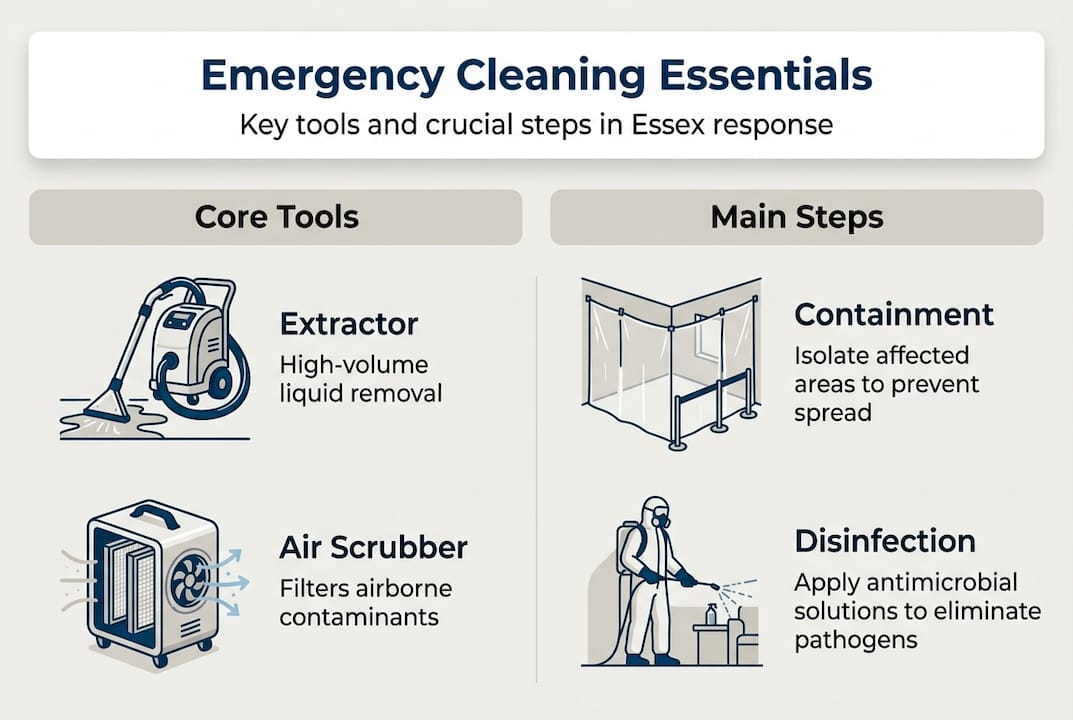
Professional emergency cleaners bring industrial extraction equipment, antimicrobial treatments, air scrubbers, and dehumidifiers that homeowners simply cannot access. They understand which materials can be salvaged versus what must be removed entirely. Their experience with types of cleaning services for Essex properties ensures they select appropriate protocols for each unique situation.
Pro Tip: Take photos and videos of damage immediately upon discovery, before any cleaning begins. This documentation proves invaluable for insurance claims and helps professionals assess the scope remotely while dispatching teams.
Understanding the scope of emergency cleaning services reveals why professional intervention matters. The protocols and safety standards these teams follow ensure thorough, safe remediation that protects everyone involved.
Core protocols and safety standards for emergency cleaning
Professional emergency cleaning follows rigorous methodologies designed to eliminate hazards whilst protecting workers and occupants. Core methodologies follow ANSI/IICRC S540 for trauma and crime scenes, including assessment and planning, PPE usage with Tyvek suits, respirators, and gloves, containment zones, biohazard removal from porous and non-porous surfaces, hospital-grade disinfection, enzymatic cleaners, waste disposal protocols, testing, and odour control.
The process begins with comprehensive assessment. Technicians identify contamination types, measure affected areas, test for hidden moisture or pathogens, and develop a detailed remediation plan. This planning phase determines equipment needs, establishes containment strategies, and sets realistic timelines for completion.
Personal protective equipment forms the foundation of worker safety:
- Full-body Tyvek suits prevent skin contact with contaminants
- N95 or P100 respirators filter airborne pathogens and particles
- Multiple layers of nitrile gloves protect hands during removal tasks
- Face shields and safety goggles guard against splashes
- Waterproof boots with slip-resistant soles navigate wet, contaminated areas
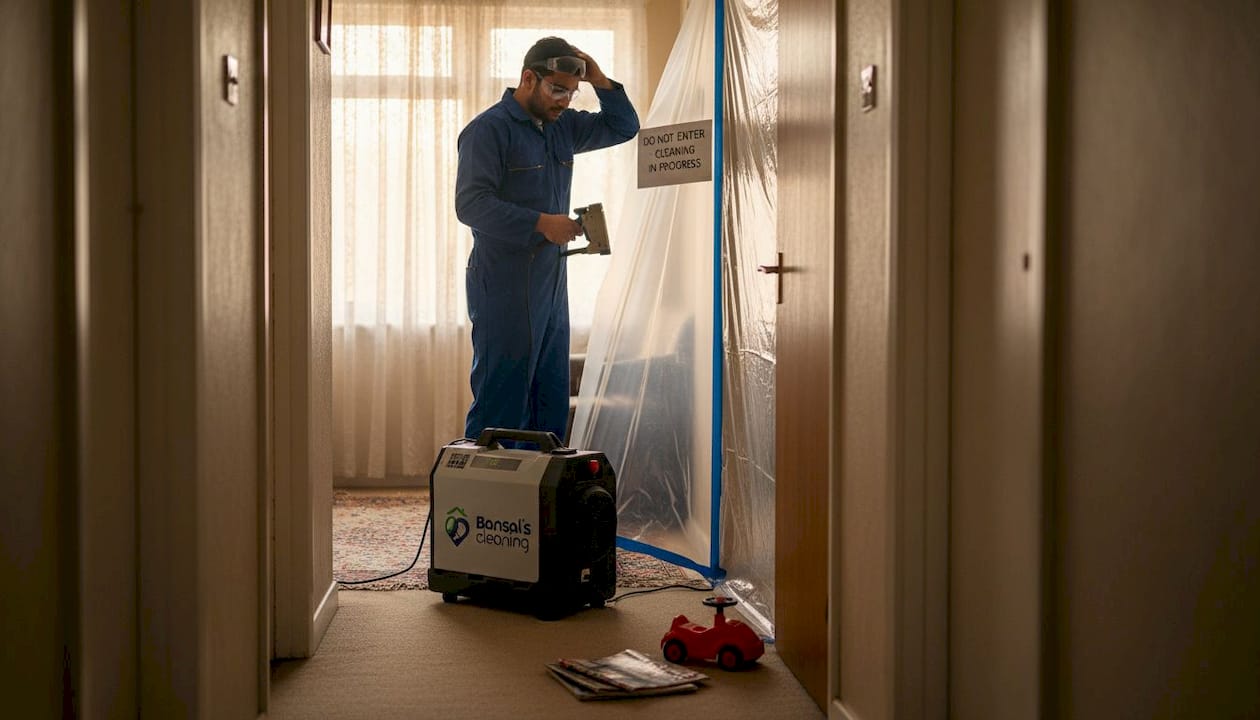
Containment zones prevent cross-contamination to unaffected areas. Teams seal doorways with plastic sheeting, establish negative air pressure using HEPA-filtered air scrubbers, and create designated entry and exit points with decontamination stations. These measures keep biohazards confined whilst work progresses.
Removal processes differ based on material porosity. Non-porous surfaces like metal, glass, and sealed tile can be disinfected and restored. Porous materials including drywall, carpet, upholstery, and unsealed wood often require complete removal because contamination penetrates beyond surface cleaning capabilities. Technicians carefully extract affected materials, double-bag them in biohazard containers, and arrange proper disposal through licensed waste management facilities.
Disinfection employs hospital-grade products proven effective against pathogens:
- Apply EPA-registered quaternary ammonium compounds to kill bacteria and viruses
- Use enzymatic cleaners to break down organic matter at molecular level
- Treat surfaces with oxidising agents for stubborn contamination
- Allow proper dwell time for each product to achieve maximum efficacy
- Rinse thoroughly to remove chemical residues
Verification testing confirms successful remediation. ATP (adenosine triphosphate) testing measures biological contamination levels, providing objective data that surfaces meet safety standards. Air quality testing identifies remaining airborne contaminants. These scientific measurements replace subjective visual assessments.
Odour control addresses lingering smells that indicate incomplete cleaning or hidden contamination. Thermal fogging disperses deodorising agents throughout affected spaces, reaching crevices and porous materials. Ozone treatment oxidises odour molecules at molecular level, though this requires complete evacuation during application. Hydroxyl generators provide safer continuous treatment that works whilst spaces remain occupied.
"Proper biohazard cleaning isn't about making things look clean. It's about achieving microbiological safety verified through testing. Shortcuts risk serious health consequences and legal liability." — Industry remediation specialist
Pro Tip: Never attempt to clean biohazards yourself, even with shop-bought disinfectants. Bloodborne pathogens remain infectious for days on surfaces, and improper cleaning spreads contamination rather than eliminating it.
These rigorous protocols ensure safe, thorough remediation. Understanding what professional teams deliver helps property owners appreciate the value and set realistic expectations for response times, duration, and costs.
Timelines, costs and insurance for emergency cleaning
Response speed and service duration vary based on emergency type and scope. Most professional teams arrive within 1-2 hours across Essex for urgent calls, with premium charges applying for guaranteed sub-two-hour response. Initial assessment takes 30-60 minutes, during which technicians evaluate damage, test contamination levels, and develop remediation plans.
Active cleanup duration depends on several factors. Simple water extraction from a single room might complete within 4-6 hours. Biohazard cleanup takes 2-3 days for thorough decontamination, material removal, disinfection, and verification testing. Complex cases involving multiple rooms, structural damage, or extensive contamination can extend to a week or more.
| Emergency type | Typical response | Active cleanup duration | Drying/monitoring |
|---|---|---|---|
| Water damage | 1-2 hours | 6-12 hours extraction | 3-5 days drying |
| Fire residue | 2-3 hours | 1-2 days cleaning | 2-4 days odour treatment |
| Sewage backup | 1-2 hours | 2-3 days removal | 4-7 days disinfection |
| Biohazard scene | 1-2 hours | 2-4 days remediation | 1-2 days verification |
| Mould outbreak | 2-4 hours | 3-5 days removal | 5-7 days prevention |
Cost factors reflect emergency timing, damage extent, and specialised requirements. Weekend and holiday rates typically add 25-50% premiums. After-hours calls (10pm to 6am) incur additional charges. Damage scope drives the largest cost variations because extensive contamination requires more labour hours, materials, and disposal fees.
Hidden contamination discovered during initial work increases costs beyond original estimates. Water that seeped into wall cavities, subfloor moisture requiring removal, or mould growth behind surfaces all expand project scope. Reputable companies communicate these findings immediately and obtain approval before proceeding with additional work.
Insurance coverage often includes emergency cleaning for covered perils. Most policies cover water damage from sudden pipe bursts, fire damage cleanup and restoration, and trauma scene remediation. Gradual damage from long-term leaks or maintenance neglect typically faces exclusion. Sewage backup coverage requires specific endorsements on many policies.
Professional cleaning companies work directly with insurance providers to streamline claims:
- Document damage with detailed photos and written reports
- Provide itemised estimates that match insurance requirements
- Communicate directly with adjusters to explain scope and methods
- Submit invoices in formats insurers accept
- Offer payment plans if coverage disputes arise
This direct coordination reduces stress for property owners during already difficult situations. Understanding your policy details before emergencies occur helps set realistic expectations. Review your coverage annually and ask specifically about emergency cleaning provisions, response time requirements, and documentation needed for claims.
Pro Tip: Keep your insurance policy documents accessible and know your claims contact number. During emergencies, having this information readily available speeds up the approval process and gets professional help onsite faster.
Timelines and costs provide practical expectations, but certain emergency scenarios present unique challenges that demand specialist expertise beyond standard protocols.
Special cases and expert nuances in emergency cleaning
Complex emergency situations require advanced protocols and specialised training that distinguish professional services from basic cleaning. Unattended deaths involve decomposition fluids seeping into subfloors, hoarding risks pests and mould, Category 3 sewage backups pose serious health threats, needle sweeps require sharps removal, porous materials often need complete removal, and DIY attempts risk severe health hazards and legal liabilities.
Unattended death scenes present particularly challenging contamination. Decomposition fluids penetrate flooring, seep into subflooring, and spread through porous materials far beyond visible staining. The biological hazard includes bloodborne pathogens, bacteria, viruses, and parasites that remain infectious for extended periods. Professional remediation requires removing affected flooring and subfloor sections, treating structural elements with antimicrobial sealants, and verifying complete decontamination through laboratory testing.
Hoarding environments combine multiple hazards that compound cleaning complexity. Accumulated materials create pest infestations, hidden mould growth from trapped moisture, structural damage from excessive weight, fire hazards from blocked exits, and biohazards from improper waste disposal. Cleaning requires sensitive coordination with mental health professionals, systematic sorting and removal protocols, pest control interventions, and thorough decontamination of all surfaces. The psychological aspects demand compassion and discretion throughout the process.
Sewage backups introduce Category 3 black water contamination containing faecal matter, harmful bacteria, viruses, parasites, and toxic chemicals. Everything contacted by sewage requires professional decontamination or removal. Carpets, upholstery, drywall, and insulation almost always need complete replacement because porous materials cannot be adequately disinfected. Hard surfaces undergo intensive cleaning with hospital-grade antimicrobials, followed by verification testing to confirm safety.
Needle sweeps address sharps hazards in properties where drug use occurred. Technicians methodically search every potential hiding spot, including:
- Behind and under furniture
- Inside drawers, cabinets, and closets
- Within upholstery cushions and mattresses
- Under carpets and flooring edges
- In electrical outlets and light fixtures
- Throughout outdoor areas and gardens
Each needle receives careful collection into puncture-resistant sharps containers for proper medical waste disposal. The process protects future occupants from accidental needle stick injuries and associated infection risks.
Porous material removal becomes necessary when contamination penetrates beyond surface cleaning capabilities. Drywall, insulation, carpeting, and upholstery absorb fluids deeply into their structures. Attempting to clean these materials leaves pathogens embedded within, creating ongoing health risks and persistent odours. Professional removal eliminates the contamination source entirely, followed by proper reconstruction with new materials.
DIY cleaning attempts for these scenarios create serious dangers:
| DIY approach | Professional method |
|---|---|
| Household bleach (insufficient for biohazards) | EPA-registered hospital-grade disinfectants |
| Standard protective gloves (allow pathogen exposure) | Full PPE with Tyvek suits and respirators |
| Visual cleaning (leaves hidden contamination) | ATP testing and laboratory verification |
| Household waste disposal (illegal for biohazards) | Licensed medical waste management |
| No containment (spreads contamination) | Negative pressure zones with HEPA filtration |
| Surface treatment only (ignores penetration) | Complete removal of porous materials |
Legal liability compounds health risks. Improper biohazard handling violates environmental regulations and exposes you to significant fines. If contamination spreads to neighbouring properties or harms future occupants, civil liability can reach devastating financial levels. Insurance policies typically exclude coverage for damage resulting from improper DIY remediation attempts.
Professional teams bring compassion to sensitive situations. They understand the emotional trauma accompanying these emergencies and work discreetly to protect privacy. Technicians receive training in appropriate communication, respectful handling of personal belongings, and coordination with law enforcement or social services when necessary.
Pro Tip: If you discover a potentially hazardous scene, immediately leave the area, close doors to contain it, and contact professionals. Do not attempt any cleaning, even to "help" before they arrive. Your safety and proper evidence preservation both depend on leaving everything untouched.
Understanding these complex scenarios and specialist capabilities helps property owners recognise when professional emergency cleaning becomes absolutely essential rather than merely advisable.
Explore professional cleaning services in Essex
When emergencies strike your Essex property, rapid professional response protects your health, preserves your investment, and restores safety quickly. Bansal's Cleaning provides expert emergency response alongside comprehensive cleaning solutions for residential and commercial clients throughout Essex. Our certified teams bring specialised equipment, proven protocols, and compassionate service to every situation.
Whether you need immediate emergency intervention or ongoing commercial cleaning Essex services, our professionals deliver thorough, reliable results. We serve councils, NHS sites, estate agents, property agencies, students, tenants, homeowners, and restaurants with tailored cleaning programmes. Our regular domestic cleaning services maintain healthy environments, whilst our end of tenancy cleaning services ensure smooth property transitions. Contact Bansal's Cleaning today for trusted, rapid support when you need it most.
Frequently asked questions
What should I do immediately after a cleaning emergency occurs?
Ensure everyone's safety first by evacuating contaminated areas and closing doors to contain the hazard. Take photos and videos for insurance documentation, then contact professional emergency cleaners immediately. Do not attempt any cleaning yourself, as this risks spreading contamination and compromising your health.
Can I perform emergency cleaning myself safely?
No, emergency cleaning involving biohazards, sewage, or extensive contamination requires professional expertise, specialised equipment, and proper disposal methods. DIY attempts expose you to serious health risks, violate environmental regulations, and often worsen damage by spreading contamination. Professional services ensure safe, thorough remediation verified through testing.
How does insurance typically work for emergency cleaning claims?
Most homeowner and commercial policies cover emergency cleaning for sudden events like pipe bursts, fires, and trauma scenes. Contact your insurer immediately after discovering damage, document everything thoroughly, and choose professionals experienced in working with insurance companies. They handle communication with adjusters, provide required documentation, and submit proper invoicing to streamline your claim.
How fast can emergency cleaners arrive in Essex?
Professional emergency cleaning services typically arrive within 1-2 hours across Essex for urgent calls. Some companies offer guaranteed sub-two-hour response for premium fees. Response times depend on your location, time of day, and current demand, but 24/7 availability ensures help arrives promptly regardless of when emergencies occur.
What kinds of emergencies qualify for professional emergency cleaning?
Professional emergency cleaning addresses water damage from floods or pipe bursts, fire and smoke residue, sewage backups, mould outbreaks, biohazard scenes involving bodily fluids, trauma and crime scenes, hoarding situations, and chemical spills. Any situation posing immediate health risks or threatening property damage qualifies for urgent professional response.
Why must porous materials be removed rather than cleaned?
Porous materials like carpet, drywall, and upholstery absorb contamination deep into their structures where disinfectants cannot reach. Pathogens remain embedded within these materials, creating ongoing health risks and persistent odours. Complete removal eliminates the contamination source entirely, ensuring thorough remediation verified through testing rather than relying on surface cleaning that leaves hidden hazards.