
Choosing the right carpet cleaning method can feel genuinely overwhelming. Walk into any cleaning supplies aisle or search online and you'll find a dozen different approaches, each claiming to be the best. The truth is, carpet maintenance is essential for home hygiene and longevity, yet no single method works for every home, carpet type, or lifestyle. Whether you're a busy family in Chelmsford, a landlord preparing a rental in Southend, or a tenant trying to secure your deposit back, this guide breaks down every major carpet cleaning method with clear, practical guidance so you can make the right call.
Table of Contents
- How to evaluate carpet cleaning methods
- Hot water extraction (steam cleaning)
- Dry carpet cleaning methods
- Shampooing carpets
- Bonnet cleaning
- Eco-friendly and non-toxic carpet cleaning options
- Comparison of carpet cleaning methods
- Which carpet cleaning method is best for your Essex home?
- Upgrade your carpet care with professional services in Essex
- Frequently asked questions
Key Takeaways
| Point | Details |
|---|---|
| Match method to your carpet | Choose a cleaning method based on your carpet’s fibre, level of soiling, and household needs. |
| Steam cleaning for deep hygiene | Hot water extraction offers the most thorough clean and is excellent for allergy sufferers and busy homes. |
| Dry cleaning for speed | Dry methods are best when you need quick turnaround and minimal downtime on carpets. |
| Consider eco-friendly solutions | Plant-based and non-toxic options are safe for pets, children, and the environment. |
| Professional support is available | Expert cleaning services can deliver deeper, longer-lasting results for Essex homes. |
How to evaluate carpet cleaning methods
Before diving into specific methods, it's important to know what to look for when comparing your options. Not all carpets are created equal, and neither are the households they live in. Effective cleaning depends on carpet material, soiling, home footfall, and lifestyle. A wool carpet in a quiet two-person flat needs a very different approach compared to a synthetic carpet in a home with three children and two dogs.
When you're weighing up your choices, keep these five criteria in mind:
- Carpet fibre type: Wool, nylon, polyester, and blends each respond differently to moisture and chemicals.
- Level of soiling: Light surface dust calls for something different than ground-in mud or pet stains.
- Drying time available: Can you keep the room out of use for several hours, or do you need it back quickly?
- Occupant sensitivities: Allergy sufferers, young children, and pets all benefit from gentler or more thorough methods.
- Budget: Professional services offer superior results, but some DIY methods are effective for routine upkeep.
If you're considering deep cleaning carpets for the first time, start by identifying your carpet's fibre label, usually found on the underside or in the manufacturer's documentation.
Pro Tip: If anyone in your home suffers from asthma or dust mite allergies, prioritise methods that extract rather than simply agitate soil. Agitation-only methods can temporarily worsen air quality by disturbing settled allergens.
Hot water extraction (steam cleaning)
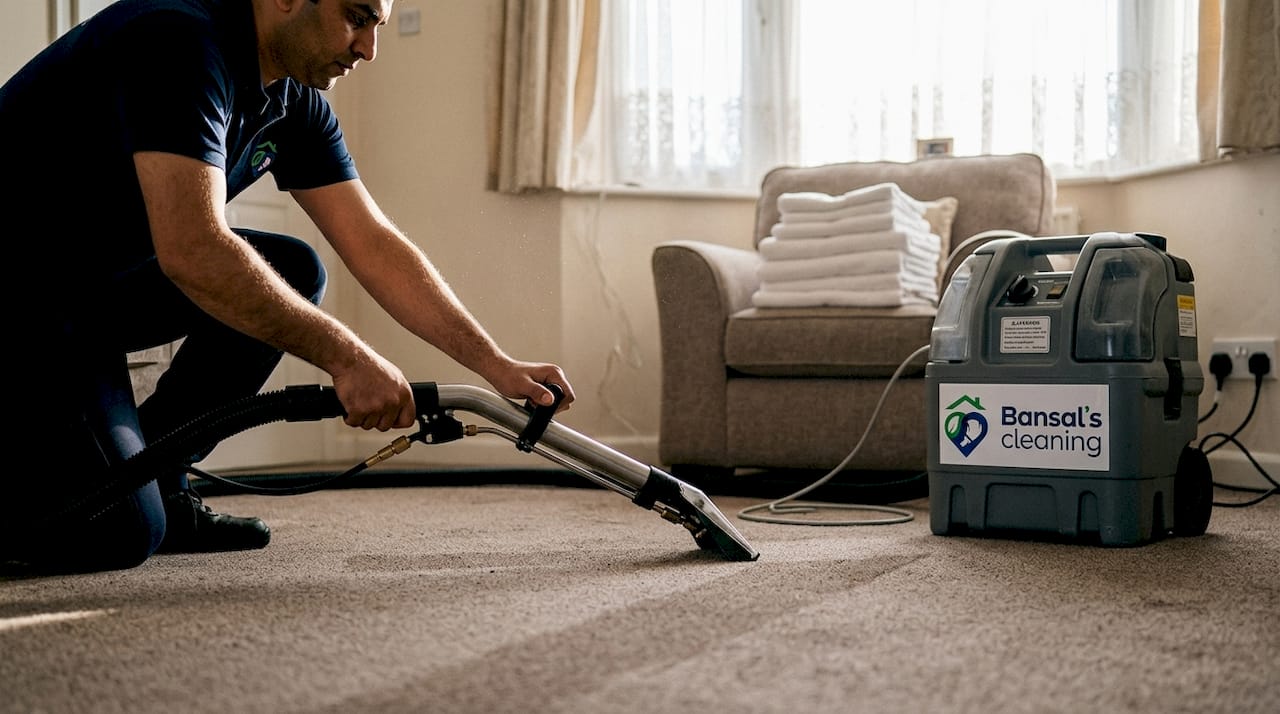
Now that you know how to judge each method, let's start with one of the most trusted professional approaches. Hot water extraction, commonly called steam cleaning, works by injecting hot water mixed with a cleaning solution deep into the carpet pile, then immediately extracting it along with dissolved dirt, bacteria, and allergens. The result is a genuinely deep clean that reaches well below the surface.
Steam cleaning is widely considered one of the most effective deep cleaning methods available for residential carpets. Here's a balanced look at what it offers:
Advantages:
- Removes deep-seated dirt, bacteria, and allergens
- Highly effective for pet odours and stains
- Recommended by most carpet manufacturers for periodic deep cleaning
- Excellent for allergy sufferers
Disadvantages:
- Drying time can range from 4 to 12 hours
- Requires professional-grade equipment for best results
- Not suitable for natural fibres like sisal or certain wool blends
- Can cause shrinkage if used incorrectly on delicate carpets
"Hot water extraction remains the gold standard for residential carpet cleaning, particularly in homes with children, pets, or occupants with respiratory sensitivities."
Pro Tip: Landlords and tenants in Essex should strongly consider carpet steam cleaning before an end-of-tenancy inspection. It's the method most letting agents and inventory clerks recognise as a thorough, professional standard clean, which can make a real difference to deposit disputes.
Dry carpet cleaning methods
If you want your carpet ready for action straight away, dry cleaning methods may be the answer. These techniques use very little or no water, relying instead on chemical compounds or encapsulation technology to break down and absorb soil.
Compound cleaning involves spreading an absorbent powder mixed with cleaning agents across the carpet, working it in with a machine, then vacuuming it away along with the trapped dirt. Encapsulation uses a polymer solution that crystallises around soil particles, which are then vacuumed up once dry.
Dry cleaning methods allow for minimal downtime and are useful in busy households where rooms cannot be left out of use for long periods.
Pros:
- Carpets are ready to use within 30 to 60 minutes
- Suitable for moisture-sensitive fibres
- Lower risk of mould or mildew from over-wetting
- Good for regular maintenance between deeper cleans
Cons:
- Primarily a surface clean, not effective for deep-set stains
- Chemical residues can attract soil over time if not fully removed
- Less effective in heavily soiled or high-traffic areas
For offices, show homes, or rental properties that need a quick refresh before viewings, dry methods are a practical and efficient choice.
Shampooing carpets
Moving from dry methods, let's look at a more traditional style that's still widely used in local homes. Carpet shampooing involves applying a foaming detergent solution to the carpet, scrubbing it in with a rotary machine to loosen dirt, and then vacuuming up the dried residue once it has settled.
Carpet shampooing remains a popular choice for tackling heavily soiled or older carpets where visible grime is the primary concern.
Benefits:
- Effective at lifting visible surface soiling and staining
- Works well on robust synthetic fibres like nylon and polyester
- Relatively affordable and widely available as a DIY option
Drawbacks:
- Shampoo residue can remain in the pile, attracting dirt more quickly after cleaning
- Longer drying times compared to dry methods
- Less effective at removing allergens or bacteria deep in the pile
- Considered less advanced than extraction-based techniques
Shampooing still has its place in Essex homes, particularly for older carpets with heavy surface soiling where a deep extraction clean isn't immediately affordable. It's worth following up with a thorough vacuum once the carpet is fully dry to remove as much residue as possible.
Bonnet cleaning
For those seeking a quick refresh rather than a deep clean, bonnet cleaning offers a surface-level solution. The process involves applying a cleaning solution to the carpet and then using a rotary machine fitted with an absorbent pad (the bonnet) to buff the surface, drawing soil up into the pad.
Bonnet cleaning is generally chosen for surface refreshes rather than deep cleaning, making it a practical option in specific situations.
Pros and cons at a glance:
- Fast: Carpets look presentable within a short time
- Low cost: Equipment is simple and the process is quick
- Good for maintenance: Ideal for keeping communal areas or show homes looking tidy
- Limited depth: Soil is often pushed deeper into the pile rather than removed
- Short-term results: Carpets can re-soil quickly as residue remains below the surface
Landlords preparing common areas in blocks of flats, or estate agents staging properties for viewings, often find bonnet cleaning a cost-effective way to maintain appearances between more thorough professional cleans.
Eco-friendly and non-toxic carpet cleaning options
If maximising health and sustainability is a priority, there are modern, eco-conscious cleaning options available. These methods use plant-based detergents, bicarbonate of soda, white vinegar solutions, and other naturally derived ingredients to clean carpets without harsh chemicals.
Eco-friendly cleaning reduces indoor air pollution and is safer for children and pets, making it an increasingly popular choice for Essex families.
Benefits:
- Non-toxic and safe for young children and animals
- Fewer irritants for allergy and asthma sufferers
- Biodegradable, reducing environmental impact
- Often gentler on delicate carpet fibres
Limitations:
- Less effective on heavy soiling or set-in stains
- May require more frequent cleaning to maintain results
- Some DIY formulations can leave residue if not rinsed properly
Pro Tip: For homes with pets or toddlers, try combining a bicarbonate of soda pre-treatment on odour-prone areas with a professional eco-friendly carpet cleaning service for the deeper clean. You get the safety of natural products with the thoroughness of professional equipment.
Comparison of carpet cleaning methods
After exploring each technique individually, here's a side-by-side overview to help you make the right choice. As noted, no single method suits all needs, and selection depends on property type, carpet, and budget.
| Method | Depth of clean | Drying time | Pet/allergy suitability | Relative cost |
|---|---|---|---|---|
| Steam cleaning | Deep | 4 to 12 hours | Excellent | Medium to high |
| Dry methods | Surface to mid | 30 to 60 minutes | Good | Medium |
| Shampooing | Surface to mid | 2 to 6 hours | Moderate | Low to medium |
| Bonnet cleaning | Surface only | 1 to 2 hours | Low | Low |
| Eco-friendly | Surface to mid | Varies | Excellent | Low to medium |
For a deeper look at the importance of carpet maintenance and how it affects your property's value and hygiene, it's worth reviewing how each method fits into a longer-term care routine.
Which carpet cleaning method is best for your Essex home?
Now that you can see your options side by side, let's clarify which method matches your home's needs in Essex. Routine cleaning keeps carpets looking fresh and extends their life, preventing the need for expensive replacement. Here are scenario-based recommendations to guide your decision:
- Busy families with children: Steam cleaning every 6 to 12 months, with eco-friendly spot treatments in between. The deep extraction removes bacteria and allergens that accumulate with heavy use.
- Allergy and asthma sufferers: Hot water extraction is the clear winner. It physically removes allergens rather than redistributing them. Pair with regular vacuuming using a HEPA-filter machine.
- Pet owners: Steam cleaning handles odours and stains most effectively. Eco-friendly pre-treatments on accident-prone areas between professional cleans help manage smells day to day.
- Landlords and letting agents: A professional steam clean before each tenancy changeover is the most defensible standard. Bonnet or dry cleaning can maintain communal areas between visits.
- Budget-conscious households: Shampooing or dry compound cleaning for routine upkeep, with a professional deep clean once a year to reset the carpet's condition.
The benefits of clean carpets go well beyond appearance. Regular professional cleaning genuinely extends carpet life, improves indoor air quality, and protects the value of your property.
Upgrade your carpet care with professional services in Essex
With so many options, sometimes the best results come from an experienced carpet cleaning team. Understanding the methods is one thing; having the right equipment, training, and products to execute them properly is another. Professional cleaners assess your specific carpet type, soiling level, and household needs before selecting the most appropriate technique, ensuring you get a result that lasts.

At Bansal's Cleaning, we offer professional carpet cleaning tailored to Essex homes, whether you need a one-off deep clean, regular upkeep through our domestic cleaning services, or a thorough end of tenancy cleaning Essex to protect your deposit. We use eco-friendly, biodegradable products and professional-grade equipment to deliver results you can see and feel. Get in touch via phone or WhatsApp for an instant quote, or book online in minutes.
Frequently asked questions
How often should carpets be professionally cleaned in Essex homes?
Professional cleaning is recommended every 6 to 12 months, depending on foot traffic and soiling. Homes with pets, children, or allergy sufferers benefit from more frequent cleaning to maintain hygiene and extend carpet life.
Which carpet cleaning method removes allergens most effectively?
Hot water extraction is the most effective method for removing allergens, as it physically extracts particles from deep within the pile. Steam cleaning is highly recommended for allergy and asthma sufferers.
Is it safe to clean carpets with DIY eco-friendly products?
Yes, plant-based solutions and bicarbonate of soda are safe for routine maintenance and particularly suitable for homes with children or pets. For stubborn or set-in stains, eco-friendly professional care delivers more reliable results.
Which method dries carpets the fastest?
Dry carpet cleaning methods offer the fastest drying times, typically 30 to 60 minutes. Dry cleaning minimises downtime, making it ideal for busy households or high-use areas that cannot be left out of service for long.
Does regular carpet cleaning help with rental deposit returns?
Yes, routine and end-of-tenancy carpet cleaning significantly improves the chances of a full deposit return. Carpet cleaning is one of the most commonly cited requirements in tenancy agreements across Essex rental properties.