
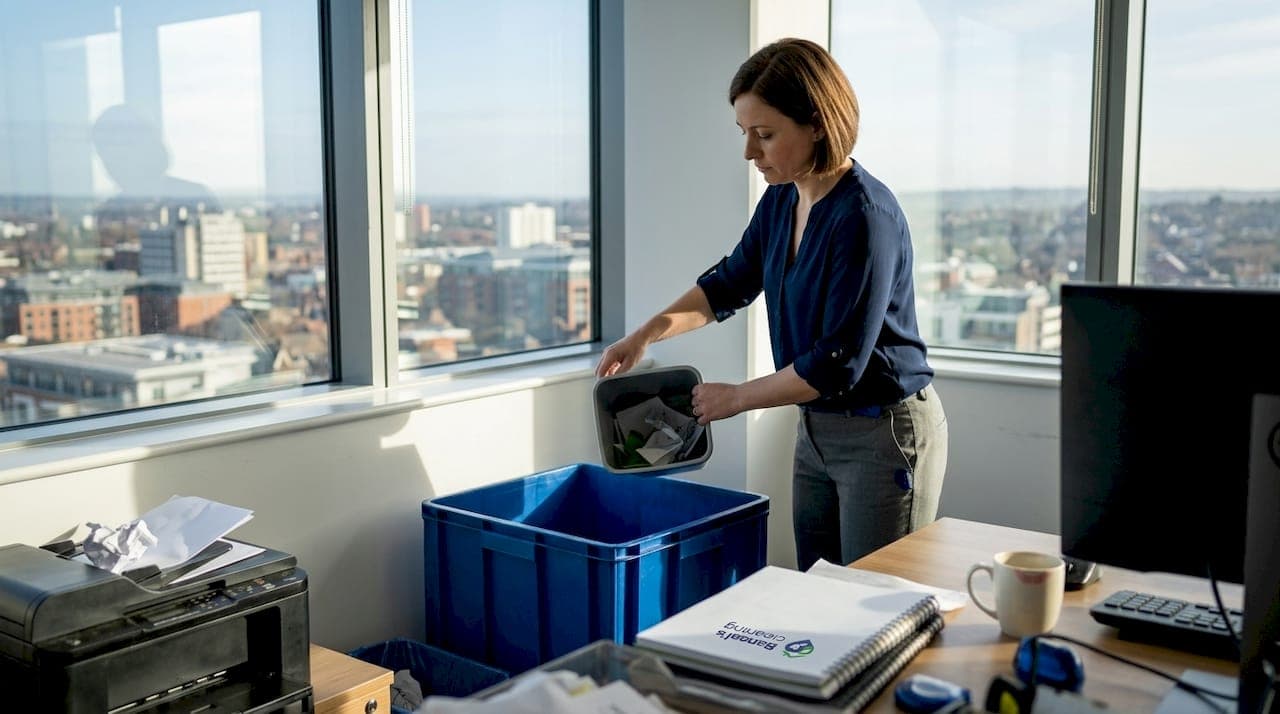
A dirty office costs more than you think. Staff take more sick days, clients form poor first impressions, and productivity quietly drops as clutter and grime pile up. Regular office cleaning reduces absenteeism due to illness, which means a cleaner workplace is also a more profitable one. This guide gives Essex office managers and business owners a clear, practical framework for maintaining a hygienic, professional workspace, from gathering the right supplies to knowing exactly when to call in the experts.
Table of Contents
- Why a clean office matters for Essex businesses
- What you need before you start cleaning
- Step-by-step office cleaning checklist
- How to avoid common cleaning mistakes
- How to verify results and when to seek professional help
- Find trusted office cleaning services in Essex
- Frequently asked questions
Key Takeaways
| Point | Details |
|---|---|
| Healthier workforce | Regular and thorough office cleaning reduces staff illness and improves wellbeing. |
| Effective preparation | Success depends on having the right tools, supplies, and clear cleaning routines. |
| Avoid common mistakes | Missed touchpoints and poor scheduling lead to hygiene gaps; periodic reviews are essential. |
| Expert help available | Professional cleaning services in Essex provide higher standards and specialist solutions when needed. |
Why a clean office matters for Essex businesses
A clean office is not just about appearances. It directly affects the health of everyone who walks through the door. Poor air quality, dusty surfaces, and bacteria on shared equipment all contribute to higher rates of illness among staff. Office cleaning boosts hygiene and reduces health risks, which translates to fewer sick days and a more reliable workforce.
Productivity is also tied to cleanliness in ways that might surprise you. Research consistently shows that cluttered, dirty environments reduce focus and increase stress. When your team walks into a fresh, well-organised office, they settle into work faster and stay on task longer. For Essex businesses competing in busy commercial areas, that edge matters.
There are legal obligations to consider as well. Under the Workplace (Health, Safety and Welfare) Regulations 1992, employers must maintain clean premises and adequate sanitation. Failing to meet these standards can result in enforcement action. Refer to a detailed office cleaning guide to ensure your workplace stays compliant.
Here is what a clean office delivers for your Essex business:
- Fewer staff sick days and reduced absenteeism
- Improved air quality and reduced allergens
- A professional image for visiting clients and partners
- Legal compliance with health and safety regulations
- Higher staff morale and a more positive working culture
"A clean workplace is not a luxury. It is a baseline expectation for any business that takes its people and its reputation seriously."
Stat to note: Businesses that invest in regular professional cleaning report up to 30% fewer sick days among staff, a significant saving when you factor in lost productivity and temporary cover costs.
Now that we have established why cleanliness is critical, let us look at what you will need to organise your cleaning routine.
What you need before you start cleaning
Getting organised before you start saves time and ensures nothing gets missed. The right supplies make the difference between a surface that looks clean and one that actually is. Stock up on the following essentials:
- Microfibre cloths (colour-coded by area to avoid cross-contamination)
- Multi-surface disinfectant spray
- Glass cleaner for screens and partitions
- Toilet and bathroom cleaner
- Mop, bucket, and floor cleaner
- Vacuum cleaner with HEPA filter
- Disposable gloves and, where needed, a face mask
- Bin liners in multiple sizes
Before cleaning begins, clear surfaces of personal items and paperwork. Secure any sensitive documents or equipment that should not be exposed to moisture or cleaning chemicals. Switch off computers and unplug devices before wiping them down. These small steps prevent damage and make the cleaning process far more efficient.
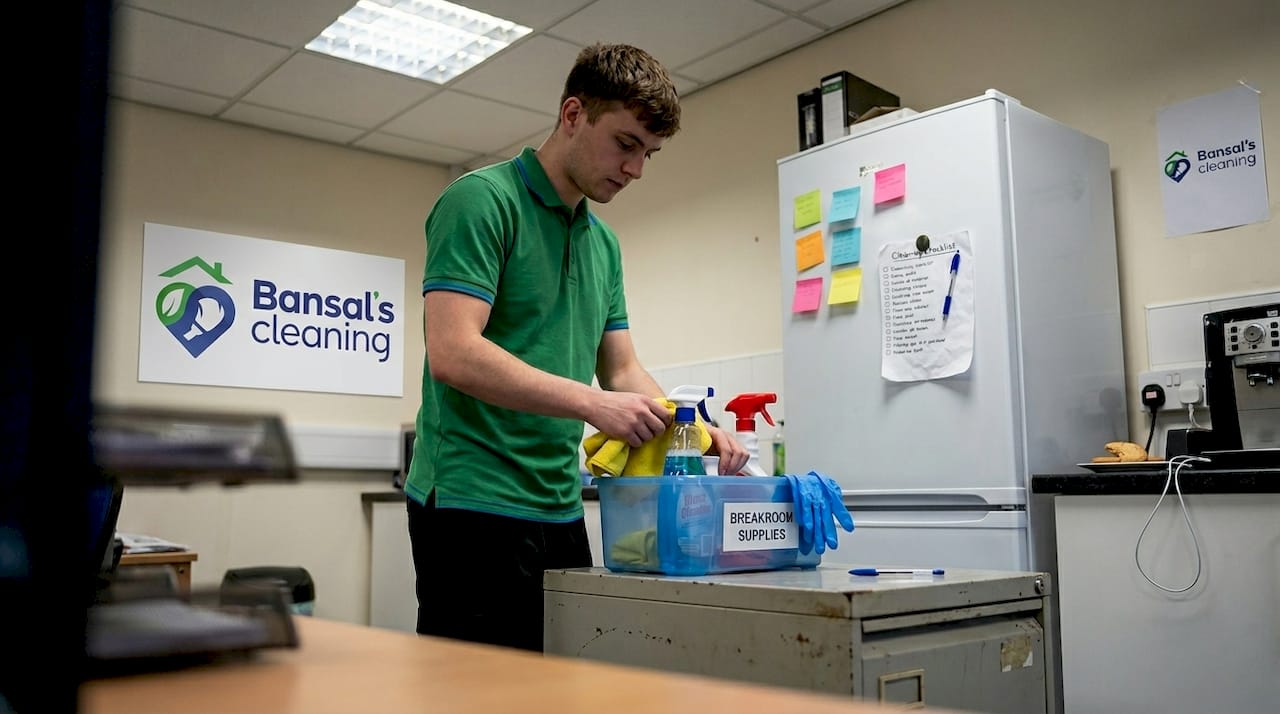
One important choice you will face is whether to use standard or eco-friendly cleaning products. Eco-friendly cleaning products reduce environmental impact without sacrificing effectiveness, which is increasingly important for businesses with sustainability commitments.
| Feature | Standard products | Eco-friendly products |
|---|---|---|
| Effectiveness | High | Equally high when used correctly |
| Chemical content | Synthetic, often harsh | Biodegradable, plant-based |
| Staff safety | May cause irritation | Gentler on skin and airways |
| Environmental impact | Higher | Significantly lower |
| Cost | Generally lower upfront | Competitive over time |
| Certifications | Varies | Often certified green |
For appliance cleaning tips in your office kitchen, always check product compatibility before applying anything to microwaves, kettles, or fridges.
Pro Tip: Store all your cleaning supplies in a single, clearly labelled caddy or trolley. Grouping products by zone (kitchen, bathrooms, desks) means whoever is cleaning can grab what they need without hunting around, cutting cleaning time noticeably.
With everything you need in place, let us walk through a detailed cleaning process for every part of your office.
Step-by-step office cleaning checklist
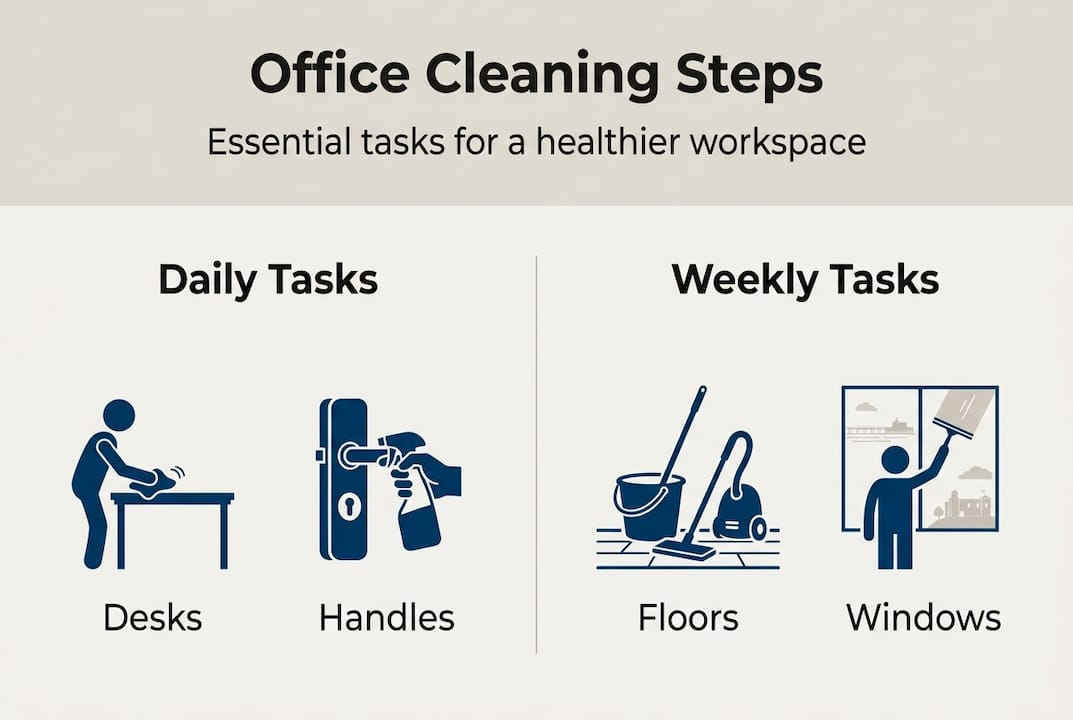
Structured cleaning routines support ongoing hygiene and a professional appearance. Without a clear checklist, tasks get skipped, and standards slip gradually over time. Follow this sequence to cover every area thoroughly.
Daily tasks:
- Empty all bins and replace liners
- Wipe down desks and workstations with disinfectant
- Clean all high-touch surfaces: door handles, light switches, shared keyboards, and phones
- Sanitise the kitchen area: wipe countertops, clean the sink, and check the fridge for expired items
- Clean and disinfect all toilet and bathroom surfaces
- Vacuum or sweep hard floors and entrance mats
- Restock soap, paper towels, and toilet roll
Weekly tasks:
- Deep clean the kitchen appliances inside and out
- Vacuum upholstered chairs and soft furnishings
- Mop all hard floors with an appropriate floor cleaner
- Clean glass partitions, windows, and mirrors
- Dust shelving, skirting boards, and vents
- Follow deep carpet cleaning steps for carpeted areas under desks and in corridors
Use the table below to assign responsibility and frequency across your office zones. Refer to regular business cleaning routines for further guidance on scheduling.
| Office area | Daily | Weekly | Monthly | Responsible |
|---|---|---|---|---|
| Desks and workstations | Yes | Yes | Deep clean | Office manager / cleaner |
| Kitchen and break room | Yes | Yes | Appliance deep clean | Cleaner |
| Toilets and bathrooms | Yes | Yes | Grout and tile scrub | Cleaner |
| Carpets and rugs | Vacuum | Deep vacuum | Professional clean | Cleaner / contractor |
| Reception and entrance | Yes | Yes | Floor polish | Cleaner |
| Meeting rooms | After each use | Full clean | Upholstery clean | Cleaner |
For a broader view of what professional-grade routines look like, the commercial cleaning guide offers useful benchmarks for Essex businesses of all sizes.
Pro Tip: Prioritise high-touch surfaces above all else. Door handles, lift buttons, and shared keyboards harbour the most bacteria. Cleaning these twice daily during busy periods can dramatically reduce the spread of illness through your team.
Once your routine is established, it is critical to avoid the most common pitfalls and know how to check your results.
How to avoid common cleaning mistakes
Even well-intentioned cleaning routines fall short when certain habits creep in. Knowing the most frequent mistakes helps you correct them before they become costly problems.
- Skipping high-touch surfaces: Desks might look clean, but door handles and shared equipment are where bacteria truly accumulate. These must be disinfected daily, not just wiped.
- Overlooking carpets and upholstery: Carpets trap dust, allergens, and bacteria deep in their fibres. The role of carpet cleaning in maintaining a healthy office is often underestimated until staff start suffering from allergies or respiratory issues.
- Using the same cloth everywhere: Cross-contamination is a real risk. A cloth used in the bathroom should never touch a kitchen surface. Colour-coded microfibre cloths solve this instantly.
- Not rotating or reviewing schedules: Cleaning rotas go stale. Staff change, office layouts shift, and new equipment arrives. Review your schedule every quarter.
- Ignoring health and safety compliance: Using the wrong chemicals without proper ventilation, or failing to display wet floor signs, can lead to accidents and liability.
Professional cleaning teams help ensure thorough coverage and avoid missed areas, particularly in larger offices where it is easy for zones to be overlooked.
"The areas that look clean are rarely the problem. It is the areas nobody thinks to check that cause the most harm."
Pro Tip: Set a monthly review where you walk through the office with your cleaning checklist and physically check each area. Note anything that has been missed or has deteriorated. This simple habit catches problems early and keeps standards consistently high.
To ensure your efforts pay off, let us clarify how to verify cleaning success and when to consider professional help.
How to verify results and when to seek professional help
Cleaning without checking results is like cooking without tasting. You need a simple system to confirm that your standards are actually being met. Here is a practical verification process:
- Visual inspection: Walk each area after cleaning. Look for streaks on glass, dust on surfaces, and stains on floors or upholstery.
- The touch test: Run a finger along skirting boards, window ledges, and the tops of monitors. If it comes away grey, the area needs more attention.
- The odour check: A clean office smells neutral. Persistent odours in kitchens, bathrooms, or carpeted areas signal deeper issues that surface cleaning will not fix.
- Staff feedback: Ask your team regularly. They notice things you might miss, and their comfort is a reliable indicator of cleanliness standards.
- Track illness rates: If staff sick days are rising, poor hygiene is a likely contributor. Monitor absence patterns alongside your cleaning schedule.
Professional cleaning services achieve higher hygiene standards and reduce risk, particularly for tasks that go beyond what an in-house routine can manage.
Know when to call in the professionals. Clear signs include:
- Persistent stains on carpets or upholstery that regular cleaning cannot shift
- A noticeable increase in staff illness or allergy complaints
- An upcoming compliance audit or client visit requiring a higher standard
- Post-renovation dust and debris that requires specialist equipment
- Any situation involving biohazards, mould, or significant contamination
Stat to note: Professional cleaning reduces sick days by up to 30%, making it one of the most cost-effective investments an Essex business can make in its people.
If your regular efforts are not hitting your desired standard, or you need specialist help, find out what professional services offer next.
Find trusted office cleaning services in Essex
For those ready to take their workplace cleanliness to the next level, professional services offer both convenience and expertise that in-house routines simply cannot match. Whether you need a one-off deep clean or an ongoing commercial contract, Bansal's Cleaning provides reliable, fully insured services tailored to Essex businesses.
Our commercial cleaning services cover offices, nurseries, restaurants, and more, with flexible scheduling that works around your business hours. For more intensive needs, our deep cleaning professionals tackle the areas that routine cleaning misses, from carpets and upholstery to kitchen equipment and washrooms. If you are managing a property transition, our end of tenancy cleaning service ensures the space is left in pristine condition. Get an instant quote via phone or WhatsApp and book in three simple steps.
Frequently asked questions
How often should offices in Essex be professionally cleaned?
Weekly professional cleaning is recommended for most offices, with daily touch-ups for high-traffic areas such as reception, kitchens, and shared bathrooms.
What are the key health and safety considerations when cleaning offices?
Always wear PPE, follow chemical safety instructions on product labels, and ensure adequate ventilation. Professional guidance helps maintain safe working environments, particularly when using stronger disinfectants.
How do eco-friendly cleaning products compare to traditional ones?
Eco-friendly products are equally effective and safer for staff and the environment when used correctly, making them a smart choice for businesses with sustainability goals.
What areas of the office are most often missed in routine cleaning?
High-touch points such as door handles, light switches, and shared equipment are frequently overlooked in standard routines, yet they carry the highest concentration of bacteria.