
Carpets in Essex homes often look tired despite regular vacuuming, harbouring dust, allergens, and stubborn stains deep within the fibres. Many homeowners and tenants struggle to restore that fresh, professional appearance without resorting to harsh chemicals or expensive services. This guide walks you through effective, eco-friendly deep cleaning methods that deliver professional results, helping you decide when to tackle the job yourself and when expert help makes sense. You'll learn preparation steps, cleaning techniques, and maintenance tips to keep your carpets looking their best.
Table of Contents
- Key takeaways
- Preparing your carpet and space for deep cleaning
- Choosing the right deep cleaning method for your carpet
- Step-by-step instructions for deep cleaning your carpet
- Maintaining carpet cleanliness and troubleshooting common issues
- Professional carpet cleaning services in Essex
- Frequently asked questions
Key Takeaways
| Point | Details |
|---|---|
| Preparation essentials | Removing furniture, thorough vacuuming and testing stains optimise results and minimise damage. |
| Eco friendly options | Biodegradable cleaners and natural stain removers deliver effective cleaning while protecting indoor air quality. |
| Cleaning method choice | Steam cleaning deep cleans but requires longer drying while dry cleaning dries quickly and suits delicate carpets. |
| Stain treatment timing | Treating stains promptly prevents long term damage and makes future cleaning easier. |
Preparing your carpet and space for deep cleaning
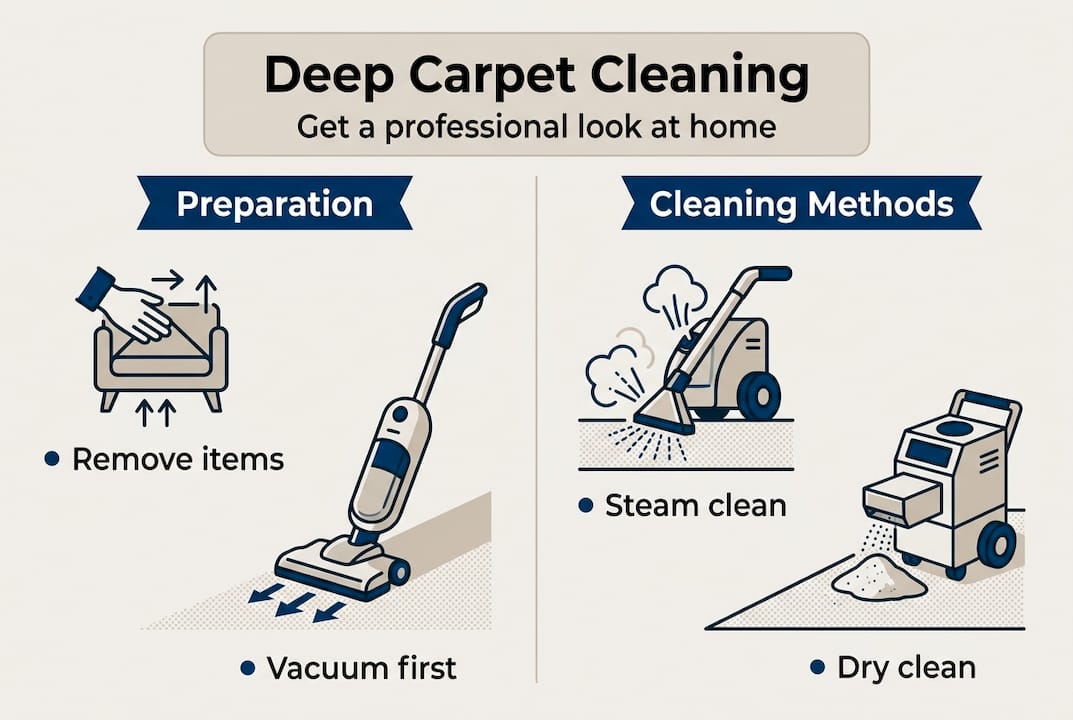
Before you begin any deep cleaning, preparing carpet for cleaning ensures a more effective process and prevents damage or mess. Start by removing all furniture from the room, or at least shift larger pieces to expose the entire carpet surface. This access allows you to clean thoroughly without missing spots around chair legs or table bases.
Vacuum the entire carpet systematically, making multiple passes in different directions. This step removes surface dirt, dust, and loose debris that would otherwise turn into muddy residue when mixed with cleaning solutions. Pay extra attention to high traffic areas where grime accumulates most heavily.
Inspect your carpet carefully for visible stains, noting their location and type. Different stains require specific pretreatment approaches, so identifying them now saves time later. Test any cleaning solution on a small, hidden area near a skirting board or under furniture to check for colour fastness and adverse reactions.
Ventilation plays a crucial role in successful carpet cleaning. Open windows and doors to create airflow that speeds drying and prevents musty odours from developing. Clear the floor space around the carpet to accommodate equipment and allow air circulation during the drying phase.
Pro Tip: Place door stoppers or wedges at room entrances to prevent foot traffic on wet carpet during the drying period. Walking on damp fibres compresses them and attracts dirt, undoing your hard work.
Consider these preparation essentials:
- Remove or relocate all furniture and small items
- Vacuum thoroughly using overlapping passes
- Identify and mark stubborn stains for pretreatment
- Test cleaning solutions in inconspicuous areas
- Ensure adequate ventilation throughout the space
- Protect adjacent rooms from moisture with towels at doorways
Choosing the right deep cleaning method for your carpet
Selecting an appropriate cleaning technique depends on your carpet type, condition, and environmental priorities. Eco-friendly carpet cleaning methods demonstrate effectiveness using green, non-toxic agents whilst reducing environmental impact. Understanding the main approaches helps you make an informed choice that delivers optimal results.
Steam cleaning, also called hot water extraction, injects heated water mixed with cleaning solution deep into carpet fibres, then extracts it along with dissolved dirt and allergens. This method reaches embedded grime that surface cleaning misses, making it ideal for heavily soiled carpets or homes with allergy sufferers. The process requires several hours of drying time but provides thorough sanitisation.
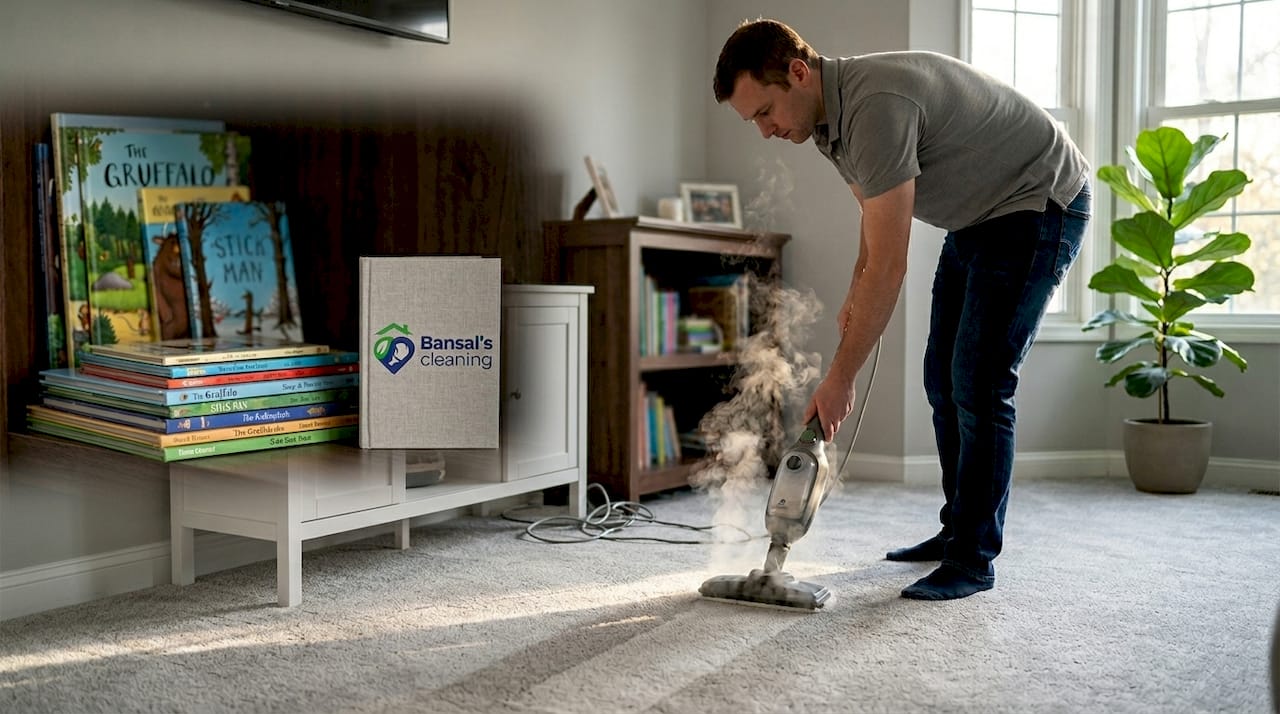
Dry carpet cleaning uses absorbent compounds or low-moisture foams that attract and encapsulate dirt particles. After applying the product and working it into the carpet with a brush or machine, you simply vacuum away the dried compound along with the trapped soil. This technique suits delicate carpets and situations where quick drying matters, such as commercial spaces or homes with limited ventilation.
Eco-friendly options include biodegradable detergents derived from plant-based ingredients, reduced water usage methods, and natural stain removers like vinegar or baking soda solutions. These choices protect indoor air quality whilst delivering effective cleaning power, particularly important for households with children, pets, or chemical sensitivities.
| Method | Pros | Cons | Drying time | Eco-friendliness |
|---|---|---|---|---|
| Steam cleaning | Deep sanitisation, removes allergens | Requires equipment, longer drying | 6-12 hours | High with green detergents |
| Dry cleaning | Quick drying, minimal moisture | Less effective on heavy soil | 1-2 hours | Varies by product |
| Encapsulation | Low moisture, fast results | Not suitable for deep stains | 2-4 hours | Moderate to high |
| Bonnet cleaning | Surface refresh, quick | Superficial only | 1-3 hours | Moderate |
Pro Tip: Avoid excessive moisture on wool or natural fibre carpets, as overwetting can cause shrinkage, colour bleeding, or backing separation. When in doubt, start with the driest method that addresses your cleaning needs.
Consider these factors when selecting your method:
- Carpet fibre type and manufacturer recommendations
- Severity of soiling and stain types present
- Available drying time before room use resumes
- Equipment access and budget constraints
- Environmental and health considerations for your household
Step-by-step instructions for deep cleaning your carpet
Once you've chosen your cleaning method, following a structured cleaning process maximises stain removal and restores carpet freshness effectively. These instructions work for both DIY cleaning and help you understand what professionals do when you hire expert services.
-
Treat visible stains first. Apply appropriate stain removers to problem areas, following product instructions for dwell time. Blot gently with a clean cloth rather than rubbing, which spreads stains and damages fibres. Common household solutions include white vinegar for acidic stains, baking soda paste for grease, and enzyme cleaners for organic matter.
-
Vacuum thoroughly again. Even after initial vacuuming, a second pass removes particles loosened during stain treatment and ensures the carpet is completely ready for deep cleaning.
-
Prepare your cleaning equipment. For steam cleaning, fill the machine's clean water tank with hot water and add the recommended amount of cleaning solution. For dry methods, measure out the absorbent compound according to the product label based on your carpet's square metreage.
-
Apply cleaning solution systematically. Work in overlapping passes from the furthest corner towards the door, ensuring even coverage. With steam cleaners, move slowly to allow the machine time to extract water and dirt. For dry methods, spread the compound evenly and work it into the pile with a brush or mechanical agitator.
-
Extract or remove cleaning agents. Steam cleaning machines automatically extract water during the cleaning pass, but you may need to make additional extraction-only passes over heavily soiled areas. For dry cleaning, allow the compound to dwell for the specified time, then vacuum thoroughly to remove all residue.
-
Allow proper drying time. Open windows, run fans, and keep traffic off the carpet for at least six to twelve hours, depending on humidity and airflow. Touch the carpet in several spots to verify it's completely dry before allowing normal use.
Pro Tip: Position fans to blow across the carpet surface rather than directly down onto it. This horizontal airflow speeds evaporation without disturbing the pile or creating uneven drying patterns that might cause watermarks.
Avoid these common mistakes:
- Over-wetting the carpet, which extends drying time and risks mildew
- Using too much cleaning solution, leaving sticky residue that attracts dirt
- Rushing the drying phase, allowing mould or odours to develop
- Walking on damp carpet, compressing fibres and leaving footprints
Maintaining carpet cleanliness and troubleshooting common issues
After investing time in deep cleaning, proper maintenance prolongs carpet life and maintains indoor air quality. Regular care between deep cleans keeps your carpets looking fresh and reduces the frequency of intensive cleaning sessions.
Vacuum high traffic areas at least twice weekly using a machine equipped with HEPA filters to trap fine particles and allergens. Less-used rooms need weekly attention. This routine removes surface dirt before it works down into the carpet backing where it's harder to extract.
Address spills immediately by blotting with clean, white cloths or paper towels. Work from the outside of the spill towards the centre to prevent spreading. Never rub or scrub, as this pushes liquid deeper into fibres and can damage the carpet pile. After blotting, apply a small amount of appropriate cleaning solution if needed.
Place doormats at all entrances and encourage household members to remove shoes indoors. This simple habit dramatically reduces the amount of outdoor dirt, grit, and moisture tracked onto carpets. Consider carpet protectors or runners in hallways and other high traffic zones.
Ensure carpets dry completely after any cleaning or spill treatment. Damp carpets provide ideal conditions for mildew growth, which creates musty odours and potential health concerns. Use fans, dehumidifiers, or open windows to speed drying, especially in humid weather.
| Issue | Likely cause | Solution |
|---|---|---|
| Sticky residue | Excess cleaning solution | Rinse with clean water extraction, then dry thoroughly |
| Lingering odours | Incomplete drying or trapped moisture | Increase ventilation, use baking soda to absorb smells |
| Stains reappearing | Wicking from backing | Retreat stain, extract more thoroughly, consider professional help |
| Carpet feels stiff | Detergent residue | Rinse with plain water, reduce solution concentration next time |
| Slow drying | Poor airflow or overwetting | Add fans, dehumidifier, avoid excessive water in future |
Pro Tip: Schedule professional deep cleaning annually or biannually depending on household traffic, pets, and allergies. Expert services use commercial-grade equipment that extracts more water and dirt than consumer machines, extending the time between deep cleans and maintaining carpet appearance.
Watch for these warning signs that indicate you need professional attention:
- Persistent odours despite thorough cleaning and drying
- Stains that resist multiple DIY treatment attempts
- Visible mould or mildew growth in carpet or backing
- Carpet feels perpetually damp or takes unusually long to dry
- Allergy symptoms worsen despite regular vacuuming
Professional carpet cleaning services in Essex
Whilst DIY deep cleaning delivers impressive results, professional services offer thoroughness and convenience that busy homeowners and tenants appreciate. Expert cleaners bring commercial-grade equipment, advanced techniques, and years of experience tackling every carpet challenge imaginable.

Professionals use powerful truck-mounted or portable extraction systems that remove far more water and dirt than rental machines, resulting in faster drying times and deeper cleaning. They understand how different carpet fibres respond to various cleaning agents and adjust their approach accordingly, preventing damage whilst maximising results.
Bansal's Cleaning provides comprehensive upholstery and carpet cleaning services across Essex, using eco-friendly products that protect your family and the environment. Our team combines hot water extraction with targeted stain treatment to restore carpets to their original freshness. We work with homeowners, tenants, landlords, and property managers who value professional results without harsh chemicals.
Regular professional cleaning complements your maintenance routine, addressing the deep-down grime that accumulates despite diligent vacuuming. Many of our clients schedule annual or biannual professional services, handling routine care themselves between visits. This approach balances cost-effectiveness with optimal carpet health.
Explore our deep cleaning services in Essex for whole-home solutions that include carpets, upholstery, and hard-to-reach areas. Discover the advantages of regular domestic cleaning to maintain your home's freshness between deep clean sessions.
Frequently asked questions
How often should I deep clean my carpets?
Experts recommend deep carpet cleaning every 12 to 18 months for typical households. Homes with pets, young children, or allergy sufferers benefit from more frequent cleaning, perhaps every six to nine months. High traffic areas may need spot deep cleaning between full-room sessions.
Can I use eco-friendly products to deep clean carpets effectively?
Yes, eco-friendly products deliver effective deep cleaning results whilst minimising environmental impact. Plant-based detergents, enzyme cleaners, and natural solutions like vinegar remove dirt and allergens without harsh chemicals. Many professional services now offer green cleaning options that match conventional methods for effectiveness.
How do I ensure my carpet dries quickly after deep cleaning?
Maximise airflow by opening windows, running fans, and using a dehumidifier if available. Clean on dry, warm days when humidity is low, as moisture in the air slows evaporation. Avoid walking on the carpet until it's completely dry, typically six to twelve hours depending on conditions and the amount of water used.
What should I do if a stain doesn't come out completely?
Repeat the stain treatment using a slightly stronger concentration of appropriate cleaner, but avoid aggressive scrubbing that damages fibres. Allow adequate dwell time for the product to work before blotting or extracting. If the stain persists after two or three careful attempts, consult professional cleaners who have specialised products and techniques for stubborn marks.