
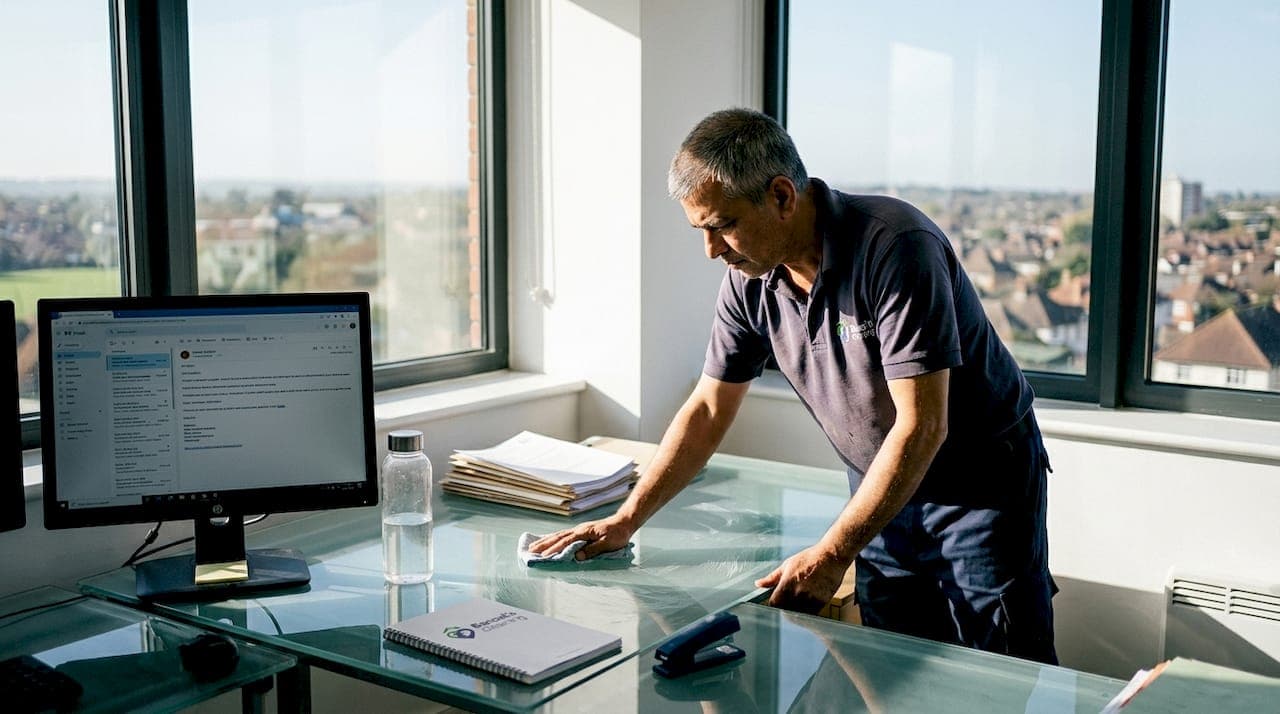
A dirty desk harbours 400 times more bacteria than a toilet seat, yet many Essex business owners still view office cleaning as a cosmetic expense rather than a strategic investment. This misconception costs businesses dearly through reduced productivity, increased sick days, and damaged client impressions. Professional office cleaning involves systematic maintenance of commercial workspaces to ensure hygiene, safety, and employee wellbeing through targeted removal of dirt, dust, germs, and clutter. Understanding what office cleaning truly entails and how to implement it effectively transforms your workspace from a health liability into a productivity asset that protects your team and elevates your brand.
Table of Contents
- Key takeaways
- What office cleaning involves: core tasks and standards
- How often should offices be cleaned? benchmarks and factors to consider
- Modern challenges and evolving practices in office cleaning
- Measuring cleaning effectiveness and unlocking business benefits
- Explore Bansal's professional office cleaning services in Essex
- Frequently asked questions about office cleaning
Key Takeaways
| Point | Details |
|---|---|
| Treat cleaning as investment | Proper office cleaning reduces sickness and boosts productivity by maintaining hygiene and safe workspaces. |
| Daily high touch tasks | Daily cleaning should sanitise door handles, light switches, phones and other high touch surfaces to curb germ spread. |
| Weekly deep cleaning | Weekly cleaning should include thorough floor care and dusting of window sills, blinds and equipment to remove dirt and allergens. |
| Monthly deep cleans | Monthly deep cleans address air vents, baseboards and upholstery to restore surfaces and improve air quality. |
| Structured cleaning schedule | Create a detailed cleaning checklist that assigns daily, weekly and monthly tasks to staff to ensure consistency and accountability. |
What office cleaning involves: core tasks and standards
Professional office cleaning operates on a tiered system that addresses immediate hygiene needs whilst tackling deeper contamination over time. Daily tasks include sanitising high-touch surfaces like desks, doorknobs, phones, and light switches where germs concentrate. Restrooms and kitchens receive thorough cleaning to prevent bacterial growth, whilst rubbish removal eliminates odours and pest attractions. These tasks form the foundation that keeps your Essex office safe between deeper interventions.
Weekly cleaning escalates the effort with comprehensive floor care through vacuuming carpets and mopping hard surfaces to remove accumulated dirt. Dusting extends beyond visible surfaces to include window sills, blinds, and equipment that collect allergens. This frequency maintains the hygiene baseline established by daily tasks without overwhelming your budget. Many Essex businesses find this rhythm sufficient for moderate-traffic environments.
Monthly deep cleans address areas that daily and weekly routines miss. Air vents accumulate dust that circulates throughout your workspace, affecting air quality and triggering allergies. Baseboards collect grime that becomes embedded over time, whilst upholstery harbours skin cells, dust mites, and spills. Bansal's deep cleaning services in Essex target these neglected zones with specialised equipment and techniques that restore surfaces to near-original condition.
Pro Tip: Create a detailed property management cleaning checklist that assigns specific tasks to daily, weekly, and monthly schedules. This structured approach ensures nothing gets overlooked and provides accountability for cleaning staff, improving consistency and quality control across your Essex property.
Essential daily office cleaning tasks
- Sanitise all high-touch surfaces including door handles, light switches, and shared equipment
- Clean and disinfect restrooms with particular attention to toilets, sinks, and taps
- Wipe down kitchen surfaces, clean appliances, and sanitise shared utensils
- Empty all rubbish bins and replace liners to prevent odours
- Spot-clean spills and stains immediately to prevent permanent damage
| Cleaning frequency | Task focus | Typical duration |
|---|---|---|
| Daily | High-touch sanitising, restrooms, kitchens, rubbish removal | 1-2 hours |
| Weekly | Floor care, comprehensive dusting, glass cleaning | 2-4 hours |
| Monthly | Deep cleaning vents, baseboards, upholstery, carpet shampooing | 4-8 hours |
Understanding the office cleaning process in Essex helps you set realistic expectations and budget appropriately for your workspace needs. The tiered approach balances immediate hygiene requirements with long-term maintenance, preventing the deterioration that leads to expensive replacements.
How often should offices be cleaned? benchmarks and factors to consider
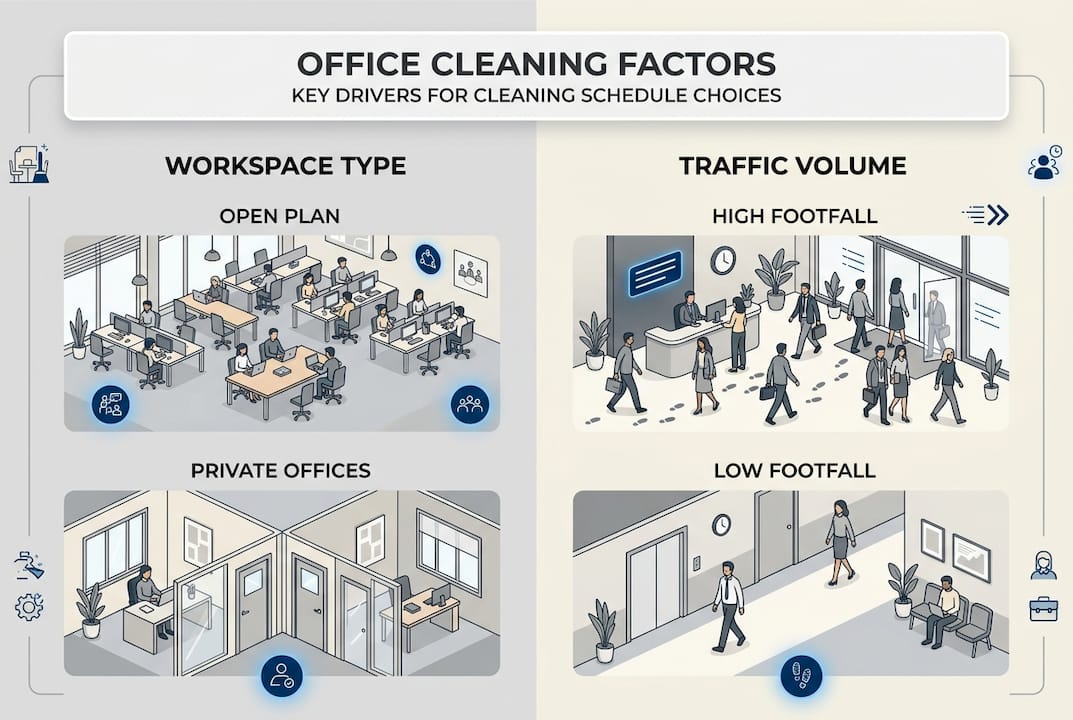
Cleaning frequency depends on three critical factors: staff count, foot traffic volume, and workspace type. Small offices with fewer than 10 employees typically manage with weekly professional cleaning supplemented by daily tidying. Medium-sized offices housing 10-50 staff benefit from 2-3 weekly sessions that address the increased contamination from more people sharing facilities. Large offices or high-traffic environments demand daily attention to maintain acceptable hygiene standards and prevent visible dirt accumulation.
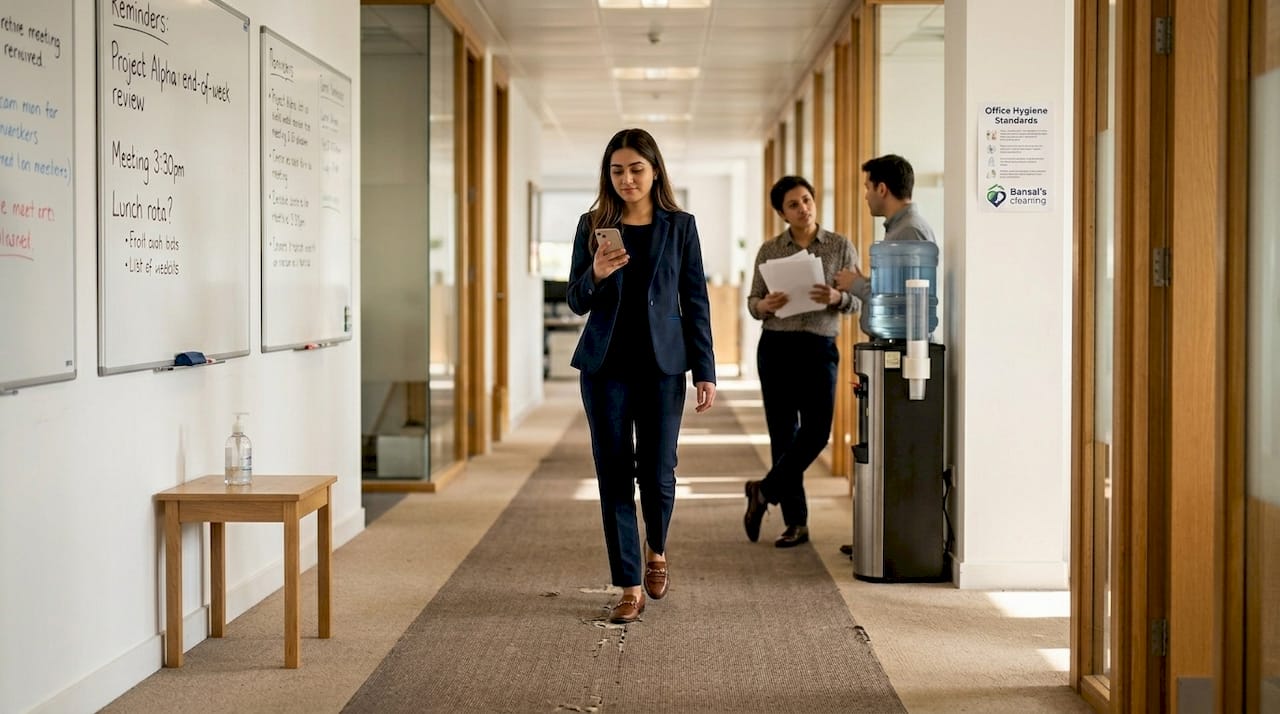
Traffic patterns dramatically affect cleaning needs beyond simple headcount. Reception areas, corridors, and shared facilities accumulate dirt faster than private offices. Research shows 85% of soil enters buildings via footwear, concentrating near entrances and walkways. Essex businesses near construction sites or in industrial areas face even higher contamination rates that require more frequent intervention.
Workspace configuration influences cleaning complexity and time requirements. Open-plan offices with shared desks need more frequent sanitising than traditional layouts with assigned workstations. Spaces with carpeting demand different care than hard floors, whilst offices with sensitive equipment require specialised techniques. Understanding how regular cleaning reduces sick days helps justify the investment in appropriate frequency for your Essex property.
Pro Tip: Monitor customer feedback scores and employee absenteeism rates as KPIs for cleaning effectiveness. A spike in complaints or sick days often signals inadequate cleaning frequency before visible dirt becomes obvious. Adjust your schedule proactively rather than reactively to maintain optimal conditions.
| Office size | Staff count | Recommended frequency | Key considerations |
|---|---|---|---|
| Small | 1-10 | Weekly | Focus on restrooms and kitchens |
| Medium | 10-50 | 2-3 times weekly | Increase attention to shared spaces |
| Large | 50+ | Daily | Implement zone-based cleaning schedules |
| High-traffic | Any | Daily plus spot cleaning | Monitor entrance areas closely |
Factors that increase cleaning frequency needs
- Client-facing businesses where first impressions directly impact revenue
- Food preparation or healthcare environments with strict hygiene regulations
- Allergy-prone staff who suffer from dust and allergen accumulation
- Seasonal factors like winter when illness transmission rates spike
- Special events or increased occupancy that temporarily boost contamination
The importance of cleaning for businesses extends beyond aesthetics to encompass legal compliance, employee wellbeing, and operational efficiency. Essex property managers who optimise cleaning frequency based on actual usage patterns rather than arbitrary schedules achieve better outcomes whilst controlling costs. Smart scheduling prevents both under-cleaning that compromises hygiene and over-cleaning that wastes resources.
Modern challenges and evolving practices in office cleaning
Multi-tenant buildings present unique coordination challenges that single-occupancy spaces avoid. Shared lobbies, lifts, and corridors require scheduled cleaning that minimises disruption across multiple businesses with different operating hours. Day porters who maintain common areas during business hours prevent the deterioration that occurs between evening cleaning sessions. Essex property managers must balance thoroughness with tenant convenience, often requiring flexible contracts that adapt to building-specific needs.
Hybrid work patterns have revolutionised office cleaning strategies by creating unpredictable occupancy. Sensor-driven systems now track actual workspace usage, allowing cleaning teams to focus resources on occupied areas rather than following fixed schedules. This data-driven approach reduces waste whilst ensuring frequently used spaces receive adequate attention. Offices that embrace flexible cleaning aligned with hybrid patterns achieve better hygiene outcomes at lower costs than traditional blanket approaches.
Post-illness disinfection protocols have become standard practice following recent health concerns. Beyond routine cleaning, spaces require enhanced sanitising after confirmed illness cases to prevent transmission. Delicate IT equipment needs specialised techniques that remove germs without damaging sensitive electronics. These nuanced requirements demand trained professionals who understand both cleaning chemistry and equipment vulnerabilities.
The debate between traditional chemical-heavy methods and sustainable eco-friendly approaches continues to evolve. Routine surface cleaning versus periodic deep cleaning represents another strategic choice, with each approach offering distinct advantages. Traditional methods often deliver faster results and stronger disinfection, whilst eco-friendly alternatives protect employee health and align with environmental goals. Many Essex businesses now blend both approaches, using green products for daily tasks whilst reserving stronger chemicals for periodic deep cleans.
Nighttime cleaning minimises disruption but leaves offices vulnerable to daytime spills and contamination. Daytime low-noise cleaning suits hybrid offices where occupancy varies but requires careful coordination to avoid disturbing focused work. Bansal's eco-friendly carpet cleaning in Essex demonstrates how modern techniques balance effectiveness with environmental responsibility.
Modern office cleaning considerations for Essex businesses
- Implement sensor technology to track actual workspace usage patterns
- Coordinate cleaning schedules across multi-tenant buildings to minimise disruption
- Develop post-illness protocols that exceed routine cleaning standards
- Train staff on proper sanitising techniques for sensitive IT equipment
- Balance eco-friendly products for daily use with stronger chemicals for periodic deep cleans
- Consider daytime cleaning for hybrid offices with variable occupancy
- Create flexible contracts that adapt to changing business needs
- Multi-tenant coordination requires clear communication channels between property managers and tenants
- Hybrid work demands flexible cleaning that responds to actual usage rather than fixed schedules
- Eco-friendly approaches protect long-term employee health whilst supporting sustainability goals
- Technology integration through sensors and tracking systems optimises resource allocation
Understanding types of cleaning services for Essex properties helps you select approaches that match your specific challenges. The cleaning industry continues evolving beyond one-size-fits-all solutions toward customised strategies that address unique workspace characteristics and usage patterns.
Measuring cleaning effectiveness and unlocking business benefits
Quality measurement transforms cleaning from a subjective assessment into an objective, data-driven process. Critical KPIs include complaint rates below one per 10,000 hours worked, restroom reset standards achieving 95% compliance, and touchpoint sanitising passing 90% of spot checks. These metrics provide concrete evidence of cleaning effectiveness rather than relying on general impressions. Essex businesses that implement systematic audits catch quality issues before they escalate into health hazards or employee dissatisfaction.
Regular quality audits using detailed checklists ensure consistent standards across all areas and cleaning sessions. Random spot checks verify that high-touch surfaces receive proper attention, whilst scheduled deep inspections assess long-term maintenance quality. Green products that meet environmental standards deliver health benefits whilst supporting corporate ESG goals, creating value beyond immediate cleanliness. This dual focus on measurement and sustainability positions forward-thinking Essex businesses as responsible employers.
The business benefits of proper office cleaning extend far beyond surface-level aesthetics. Employee morale improves measurably in clean environments where staff feel valued and protected. Client impressions form within seconds of entering your workspace, with cleanliness signalling professionalism and attention to detail. Health improvements manifest through reduced illness transmission, fewer allergy symptoms, and better air quality that supports cognitive function.
Dirty offices cause 15-30% productivity drops through increased cognitive load from visual clutter and higher illness rates from pathogen exposure. This represents a massive hidden cost that proper cleaning eliminates.
Pro Tip: Schedule quarterly quality audits that combine visual inspections with ATP testing to measure bacterial contamination on surfaces. This scientific approach validates cleaning effectiveness objectively and identifies problem areas that visual checks alone might miss, ensuring your Essex office maintains genuinely hygienic conditions.
Measurable benefits of professional office cleaning
- Reduced sick days through elimination of illness-causing pathogens and allergens
- Enhanced employee morale from working in a clean, well-maintained environment
- Improved client impressions that translate directly into business opportunities
- Extended asset lifespan through proper maintenance of carpets, furniture, and equipment
- Better air quality that supports cognitive function and reduces respiratory issues
- Regulatory compliance that protects against health and safety violations
The connection between cleaning impact on sick days and bottom-line business performance makes professional cleaning a strategic investment rather than an operational expense. Essex business owners who view cleaning through this lens allocate appropriate resources and demand measurable results that justify the expenditure. Implementing property management cleaning checklists with defined KPIs transforms cleaning from a vague necessity into a performance-driven service that delivers quantifiable value. Understanding office cleaning productivity benefits helps you communicate the importance of adequate cleaning budgets to stakeholders who focus primarily on cost reduction.
Explore Bansal's professional office cleaning services in Essex
Applying the insights from this guide requires partnering with experienced professionals who understand Essex business needs. Bansal's Cleaning delivers comprehensive commercial cleaning services in Essex tailored to your specific workspace requirements, whether you manage a small office or a large multi-tenant building. Our systematic approach combines daily maintenance with periodic deep cleaning services that address both immediate hygiene needs and long-term asset preservation.
We implement the measurement systems and quality controls discussed throughout this article, providing transparent KPIs that demonstrate cleaning effectiveness. Our commitment to eco-friendly carpet cleaning processes balances environmental responsibility with the thorough results your business demands. From councils and NHS sites to estate agents and restaurants, we adapt our services to diverse Essex properties whilst maintaining consistently high standards. Contact us to discuss how professional cleaning transforms your workspace into a productivity asset that protects your team and impresses your clients.
Frequently asked questions about office cleaning
What does office cleaning include?
Office cleaning encompasses daily sanitising of high-touch surfaces, restroom and kitchen maintenance, rubbish removal, weekly floor care and dusting, plus monthly deep cleaning of vents, baseboards, and upholstery. Professional services tailor these core tasks to your specific workspace needs and traffic patterns.
How often should an office be professionally cleaned?
Small offices with fewer than 10 staff typically need weekly cleaning, medium offices with 10-50 employees benefit from 2-3 sessions weekly, whilst large or high-traffic spaces require daily attention. Adjust frequency based on actual usage patterns, client interactions, and employee feedback rather than arbitrary schedules.
Can office cleaning reduce employee sick days?
Yes, proper office cleaning significantly reduces illness transmission by eliminating pathogens from high-touch surfaces and improving air quality. Regular professional cleaning cuts sick days by removing the bacteria and viruses that spread between employees in shared workspaces, protecting your team's health and your business productivity.
What is the difference between routine and deep cleaning?
Routine cleaning maintains daily hygiene through surface sanitising, floor care, and rubbish removal, whilst deep cleaning tackles embedded dirt in carpets, upholstery, vents, and neglected areas using specialised equipment and techniques. Both serve essential but distinct purposes in comprehensive office maintenance strategies.
How do you maintain office cleanliness with hybrid working?
Hybrid offices benefit from sensor-driven flexible cleaning that focuses resources on actually occupied spaces rather than following fixed schedules. Implement usage tracking to identify high-traffic areas, adjust cleaning frequency based on real occupancy data, and maintain core hygiene standards in shared facilities regardless of overall building occupancy.
Are eco-friendly office cleaning products effective?
Modern eco-friendly cleaning products deliver excellent results for routine maintenance whilst protecting employee health and supporting environmental goals. Many Essex businesses blend green products for daily tasks with stronger traditional chemicals reserved for periodic deep cleans, achieving both effectiveness and sustainability in their cleaning programmes.