
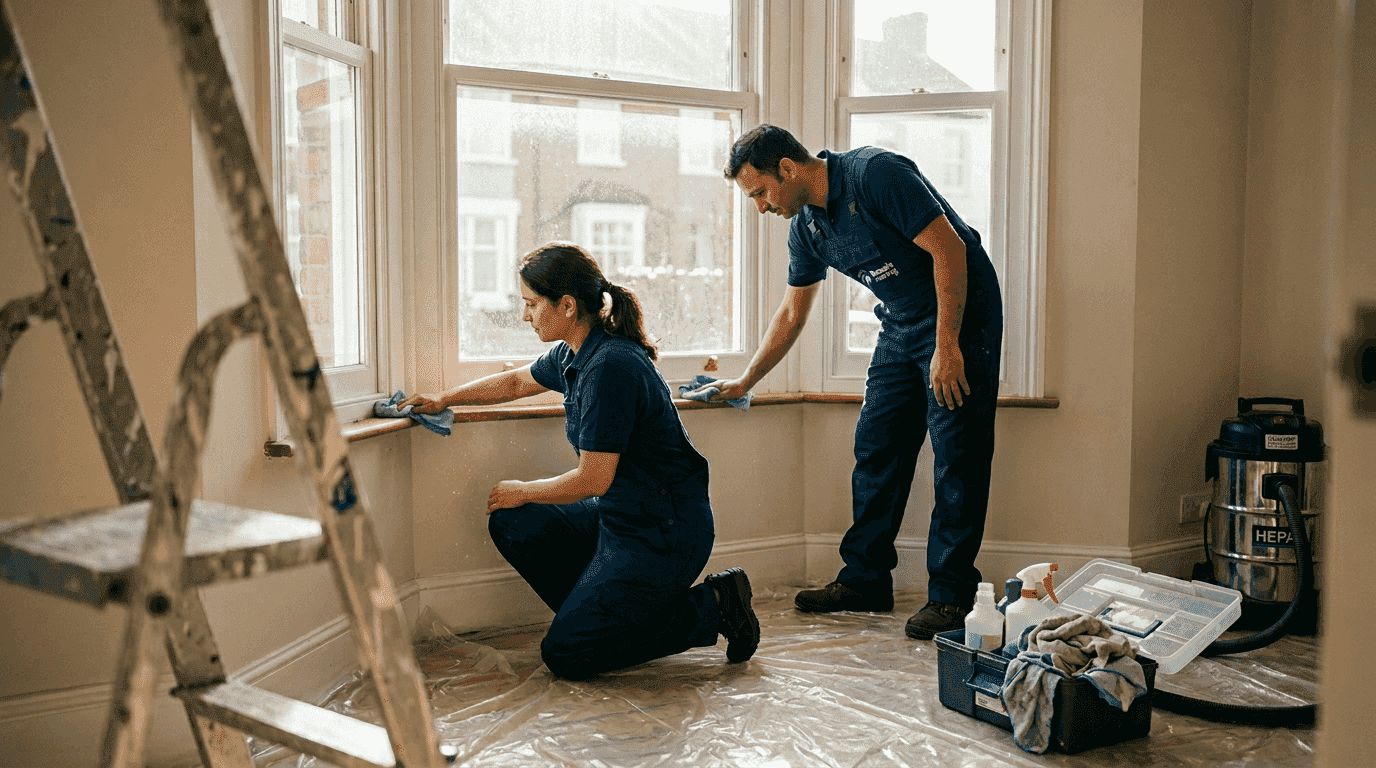
Finishing a renovation feels brilliant, but many homeowners assume a quick hoover and wipe will prepare their space for living. Standard cleaning methods cannot tackle the hazardous construction dust, adhesive residues, and fine debris that settle everywhere after building work. Post-renovation cleaning is a specialised process designed to eliminate these hidden contaminants, creating a genuinely safe and inviting environment. This guide explains what makes post-renovation cleaning essential for Essex properties, the techniques professionals use, and how proper cleaning protects your health and investment.
Table of Contents
- Understanding Post-Renovation Cleaning And Its Necessity
- Common Challenges And Techniques In Post-Renovation Cleaning
- Legal And Safety Considerations For Post-Renovation Cleaning In Essex
- Practical Steps To Prepare For And Manage Post-Renovation Cleaning
- Explore Professional Cleaning Services In Essex To Freshen Your Renovated Space
Key takeaways
| Point | Details |
|---|---|
| Specialised expertise required | Post-renovation cleaning targets construction dust and hazardous residues that standard cleaning cannot remove effectively. |
| HEPA equipment essential | Professional cleaners use HEPA vacuums capturing 99.97% of particles to eliminate fine silica dust and contaminants. |
| Legal compliance matters | Proper debris management meets safety standards and protects property managers from fines and health risks. |
| Documentation protects deposits | Tenants should photograph property conditions before and after cleaning to safeguard their deposits. |
| Professional results deliver value | Expert cleaning ensures healthier, safer, and more welcoming spaces after renovations in Essex homes. |
Understanding post-renovation cleaning and its necessity
Post-renovation cleaning is a specialised niche requiring unique expertise and equipment far beyond standard house cleaning services. After building or refurbishment work, properties accumulate construction dust, adhesive residues, paint overspray, metal shavings, and potentially hazardous materials invisible to the naked eye. These contaminants settle on every surface, inside cupboards, along skirting boards, and within ventilation systems.
Standard cleaning misses these construction residues because regular vacuums lack the filtration power to capture microscopic particles. Normal cleaning methods can actually spread fine dust rather than removing it, creating respiratory hazards for occupants. The expertise needed goes beyond wiping surfaces, it requires understanding which materials pose health risks, how to safely remove them, and which cleaning agents work best on specific construction residues.
Professional post-renovation cleaners bring specialised equipment like HEPA vacuums, industrial-grade cleaning solutions, and safety protocols that protect both workers and future occupants. They understand how silica dust behaves, where paint overspray hides, and how to eliminate adhesive residues without damaging new finishes. This level of thoroughness ensures your renovated Essex property becomes genuinely habitable rather than just appearing clean.
Key differences between regular and post-renovation cleaning include:
- Dust composition: Construction dust contains hazardous silica and metal particles versus household dust and dirt
- Debris volume: Renovation sites generate substantial material waste requiring systematic removal protocols
- Cleaning methods: HEPA filtration and wet wiping techniques versus standard vacuuming and dusting
- Safety requirements: Personal protective equipment and hazard awareness versus basic cleaning precautions
- Surface preparation: Removing adhesives and overspray versus maintaining existing finishes
Pro tip: Always hire cleaners with proven post-construction experience to avoid safety hazards and incomplete cleaning that leaves dangerous residues behind.
Understanding these distinctions helps you appreciate why cleaning services types for Essex properties vary significantly based on the situation. Post-renovation work demands specialised knowledge that general domestic cleaners typically lack.
Common challenges and techniques in post-renovation cleaning
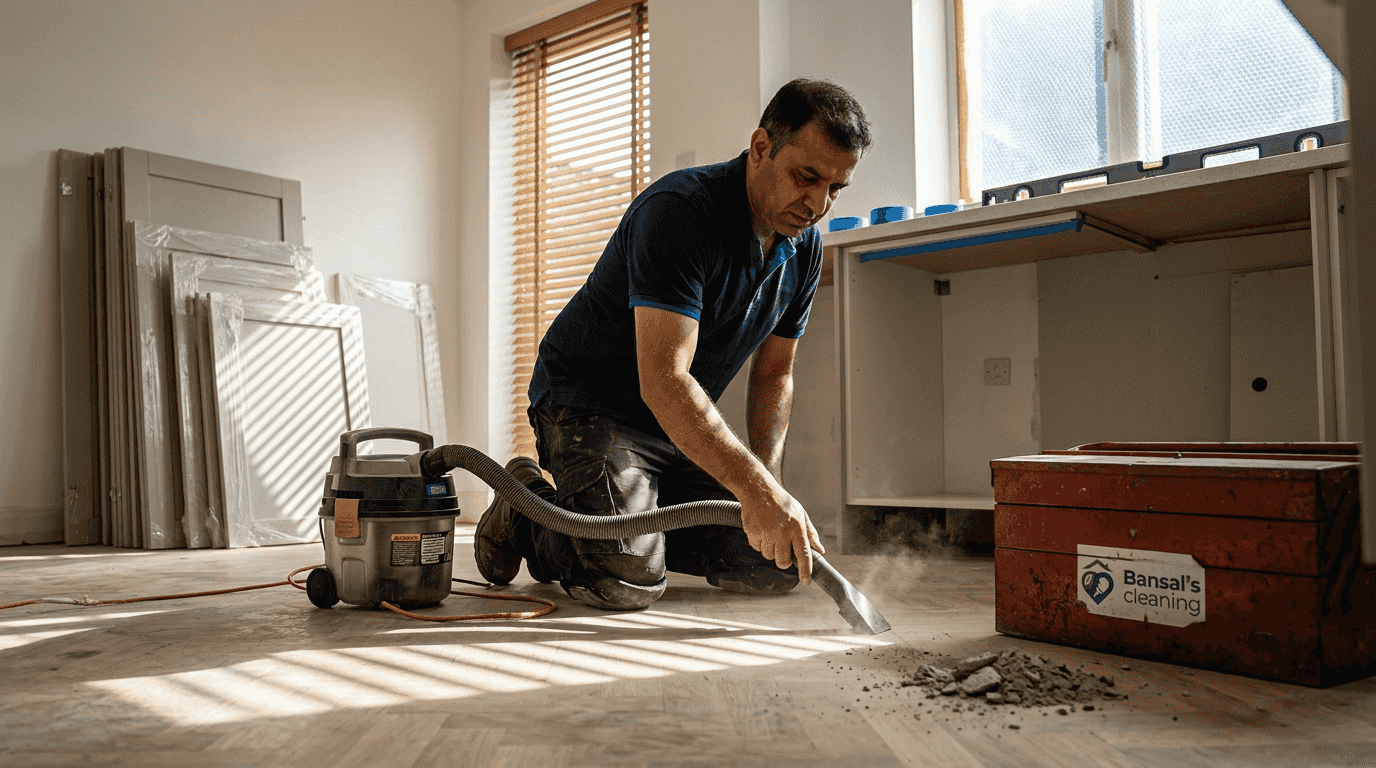
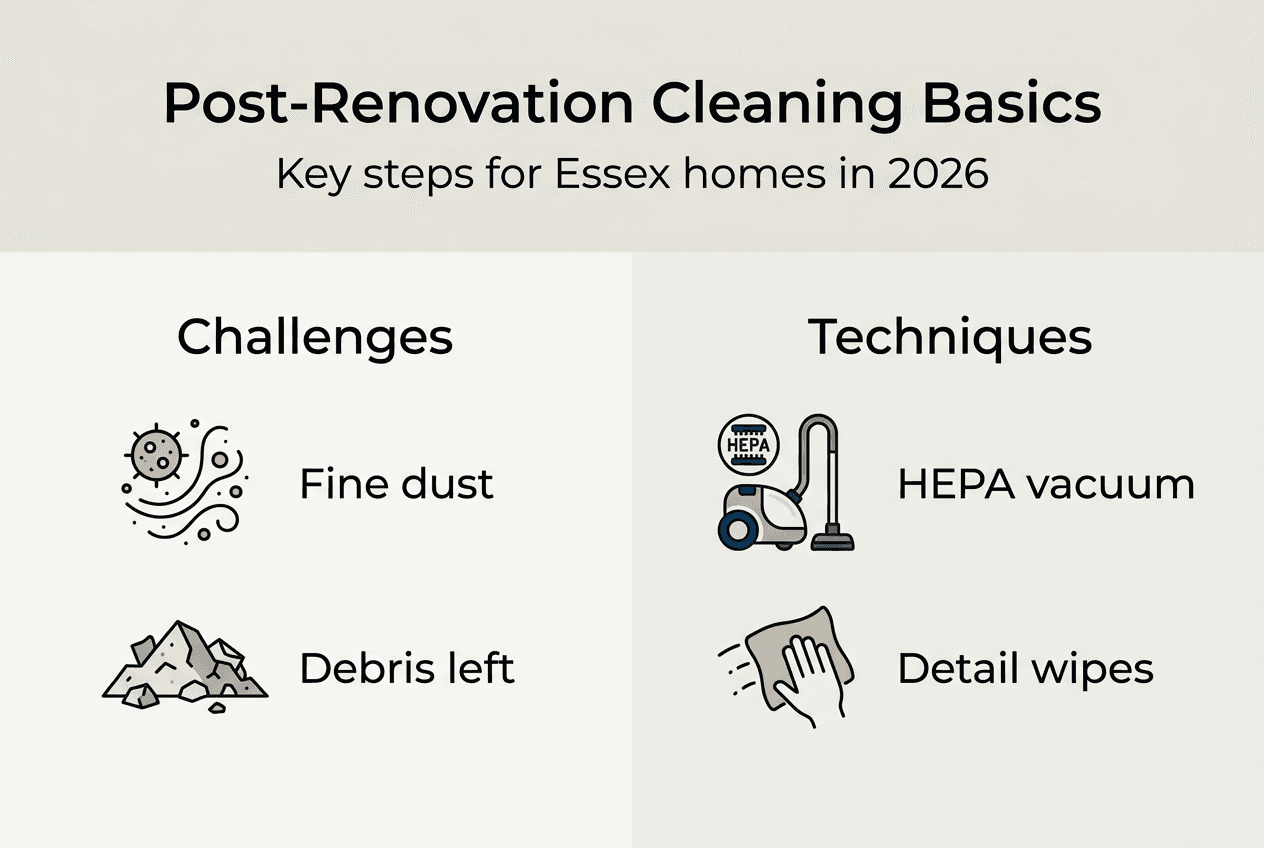
Renovation projects leave behind specific residues that require targeted cleaning approaches. Silica dust from cutting concrete or tiles poses serious respiratory risks if inhaled. Adhesive residues from tiling, flooring, or decorating stick stubbornly to surfaces. Paint overspray settles as fine mist on windows, fixtures, and floors. Metal shavings from drilling or cutting create sharp hazards that standard vacuums cannot safely collect.
Professional cleaners follow systematic processes to address these challenges:
- Remove large debris and construction waste from all areas including hidden corners and cupboards
- Deploy HEPA vacuum systems throughout the property focusing on floors, walls, ceilings, and ventilation points
- Wipe down all surfaces with appropriate cleaning solutions designed for construction residues
- Clean windows inside and out removing paint spots and adhesive marks without scratching glass
- Deep clean floors using methods suited to the material whether tile, wood, or carpet
- Inspect and re-clean areas until no visible dust or residue remains anywhere
HEPA filtration technology captures 99.97% of particles down to 0.3 microns, making it essential for removing the fine silica dust that standard vacuums recirculate into the air. This level of filtration protects both cleaners and future occupants from breathing hazardous particles that can cause long-term respiratory problems.
| Cleaning method | Particle removal efficiency | Dust containment | Safety level |
|---|---|---|---|
| Standard vacuum | 60-70% | Poor, recirculates fine dust | Low |
| HEPA vacuum | 99.97% | Excellent, traps microscopic particles | High |
| Wet wipe technique | 85-90% | Good, captures settled dust | Medium |
Safety gear and precautions for professional cleaners include:
- Respiratory masks rated for fine particle filtration during all cleaning stages
- Safety goggles protecting eyes from dust and chemical splashes
- Heavy-duty gloves resistant to cleaning chemicals and sharp debris
- Protective clothing covering skin to prevent irritation from construction residues
- Proper ventilation maintained throughout the cleaning process
Pro tip: Ensure all dust is removed before new furniture or carpets are installed to prevent contamination that becomes impossible to eliminate later.
Construction sites accumulate fine silica dust and dangerous materials requiring specialised removal techniques beyond regular housekeeping. Understanding these challenges helps property owners appreciate the value of professional post-renovation cleaning services.
The connection between thorough initial cleaning and ongoing maintenance becomes clear when you consider how carpet cleaning in property maintenance builds on the foundation of proper post-renovation work. For more practical advice, explore our cleaning tips and guides covering various property maintenance scenarios.
Legal and safety considerations for post-renovation cleaning in Essex
Legal requirements govern how construction debris must be managed during and after renovation projects. Construction housekeeping rules emphasise clearing scrap and debris from work areas, passageways, and stairs throughout the project and upon completion. These regulations exist because accumulated construction waste creates trip hazards, fire risks, and health dangers for workers and occupants.
Thorough cleaning protects health by eliminating respiratory hazards from fine dust and prevents accidents from sharp debris or slippery residues. Compliance with safety standards helps property managers avoid fines and liability issues if occupants suffer health problems or injuries linked to inadequate post-construction cleaning. The financial and legal consequences of cutting corners far exceed the cost of proper professional cleaning.
"During the course of construction, alteration, or repairs, form and scrap lumber with protruding nails, and all other debris, shall be kept cleared from work areas, passageways, and stairs, in and around buildings or other structures."
Legal safety obligations for property managers and contractors include:
- Ensuring all construction debris is properly removed before occupancy
- Maintaining safe passageways free from trip hazards throughout and after work
- Documenting cleaning procedures and completion for compliance records
- Providing safe working conditions for cleaning staff handling hazardous materials
- Meeting tenancy agreement requirements for property condition standards
Tenants should document property condition before and after cleaning to meet lease requirements and protect their deposits. Taking detailed photographs of all rooms, fixtures, and surfaces creates evidence of the property's state at handover. This documentation proves invaluable if disputes arise about cleaning standards or damage versus normal wear.
Understanding UK tenancy agreements guidance helps tenants know their rights regarding property condition and cleaning responsibilities. Landlords must provide properties in a safe, habitable state, which includes proper post-renovation cleaning when building work has occurred.
Ignoring these legal and safety considerations creates serious risks. Occupants may develop respiratory problems from lingering silica dust, suffer cuts from hidden metal shavings, or experience allergic reactions to construction chemicals. Tenants who move into inadequately cleaned properties often face deposit disputes when they leave, blamed for damage actually caused by incomplete post-renovation cleaning. Property managers risk legal action and reputational damage when health issues arise from poor cleaning standards.
Practical steps to prepare for and manage post-renovation cleaning
Preparing your property for post-renovation cleaning and coordinating with professional cleaners ensures the best results. Planning ahead prevents delays and helps you maximise the value of professional cleaning services. Clear communication about expectations, timing, and access arrangements makes the entire process smoother for everyone involved.
Steps to arrange effective post-renovation cleaning:
- Document the property condition immediately after builders finish with photographs and notes about specific concerns
- Remove any remaining building materials, tools, or equipment that contractors left behind
- Select professional cleaners with proven post-construction experience and appropriate insurance coverage
- Schedule cleaning for the earliest practical time after renovation completion to prevent dust settling deeper
- Arrange property access and ensure utilities like water and electricity remain connected for cleaning
- Discuss specific problem areas with cleaners so they allocate extra attention where needed
- Plan a final inspection walk-through to verify all areas meet your standards before signing off
What to check during and after cleaning to ensure thoroughness:
- Open cupboards and drawers to verify interiors are dust-free and wiped clean
- Run fingers along skirting boards, window sills, and door frames checking for gritty residue
- Inspect light fixtures, ceiling corners, and ventilation grilles for lingering dust
- Examine windows for paint spots, adhesive marks, or streaks that need additional attention
- Check floors in corners and under radiators where dust often hides
- Verify bathrooms and kitchens are completely free from grouting residue and plaster dust
Tenants moving into recently renovated properties should insist on professional post-renovation cleaning as part of the handover process. Take extensive before-and-after photographs showing the property's condition at move-in. These images protect your deposit by proving you received the property in its documented state, preventing landlords from claiming you caused damage that existed before your tenancy.
After thorough post-renovation cleaning, maintaining your refreshed space becomes much easier with regular domestic cleaning services that keep surfaces pristine without the heavy-duty work required initially. Ongoing maintenance prevents dust and dirt from accumulating, preserving the fresh, welcoming environment created by professional post-renovation cleaning.
Professional cleaning delivers healthier, safer, and more inviting spaces that let you truly enjoy your renovated Essex property. The investment in expert post-renovation cleaning pays dividends through improved air quality, reduced health risks, and the satisfaction of moving into a genuinely clean home or workspace. Your renovation deserves a finish that matches the quality of the building work itself.
Explore professional cleaning services in Essex to freshen your renovated space
After understanding what post-renovation cleaning involves and why it matters, you might be wondering where to find reliable professionals who can deliver these specialised services in Essex. Bansal's Cleaning offers comprehensive post-renovation cleaning alongside deep cleaning services in Essex that tackle the toughest construction residues with proven techniques and equipment.

Whether you need one-off post-renovation cleaning or ongoing support through regular domestic cleaning services, our team brings the expertise and attention to detail that transforms freshly renovated properties into truly welcoming spaces. We also provide commercial cleaning services Essex businesses trust for offices, restaurants, and other commercial properties requiring post-construction attention. Explore how professional cleaning can protect your investment and create the healthy, inviting environment your renovation deserves.
What is the purpose of post-renovation cleaning?
What is the purpose of post-renovation cleaning?
Post-renovation cleaning removes construction dust, debris, and hazardous residues that standard cleaning cannot eliminate. It ensures your renovated space becomes genuinely safe, healthy, and welcoming for occupants.
How does post-renovation cleaning differ from regular cleaning?
Post-renovation cleaning uses specialised equipment like HEPA vacuums and techniques targeting construction-specific residues such as silica dust, adhesives, and paint overspray. Regular cleaning addresses everyday dirt but lacks the filtration power and expertise needed for construction contaminants.
Should tenants document the property condition during post-renovation cleaning?
Yes, tenants should photograph all rooms and surfaces before and after post-renovation cleaning. This documentation protects deposits by proving the property's condition at handover and prevents disputes about pre-existing damage.
How soon after renovation should cleaning occur?
Ideally, post-renovation cleaning should happen immediately after builders complete their work. Prompt cleaning prevents dust from settling deeper into surfaces and allows you to occupy the space sooner with confidence in its safety.
Can regular domestic cleaning maintain the space after post-renovation cleaning?
Yes, routine domestic cleaning effectively maintains your property after thorough post-renovation cleaning. Regular maintenance prevents new dust and dirt from accumulating, preserving the fresh, healthy environment created by the initial deep clean.