

Why detailed cleaning service descriptions matter in Essex
Around 57% of potential customers abandon service bookings when they encounter vague or unclear service descriptions. For Essex homeowners, landlords, and property managers, selecting a reliable cleaning service hinges on understanding exactly what you're paying for. Detailed cleaning service descriptions eliminate guesswork, build trust, and set clear expectations that prevent costly disputes. This guide shows you how to recognise quality descriptions and choose services confidently.
Table of Contents
- The Role Of Detailed Cleaning Service Descriptions
- Core Elements Of Effective Cleaning Service Descriptions
- How Detailed Descriptions Prevent Misunderstandings And Disputes
- Common Misconceptions About Cleaning Service Descriptions
- Comparing Cleaning Service Descriptions: What To Look For
- Practical Tips For Homeowners, Landlords, And Property Managers
- Explore Trusted Cleaning Services In Essex With Detailed Descriptions
- Frequently Asked Questions
Key takeaways
| Point | Details |
|---|---|
| Trust foundation | Detailed cleaning service descriptions build trust and clarify expectations between clients and providers. |
| Scope clarity | Clear task scopes and special services reduce misunderstandings and improve satisfaction. |
| Dispute prevention | Vague descriptions lead to common disputes and dissatisfaction, whilst well-defined descriptions increase booking confidence. |
| Stakeholder benefits | Landlords and property managers benefit from documented service clarity for tenant turnover and property maintenance. |
| Customer retention | Clients who understand service details are 25% more likely to rebook with the same provider. |
The role of detailed cleaning service descriptions
Choosing the right cleaning service in Essex requires more than comparing prices. Clear descriptions inform clients about specific services and build confidence before booking. Without detail, homeowners, landlords, and managers risk unmet expectations that waste time and money.
Transparency in cleaning service details fosters lasting trust and satisfaction. A well-written cleaning service description helps establish trust, as clients feel informed and confident about the services they are purchasing. Vague descriptions increase chances of disputes and dissatisfaction, creating frustration for everyone involved.
Clear service descriptions act as an initial agreement setting scope and standards. They function like a contract preview, outlining what's included and excluded. For end of tenancy cleaning in Essex, this clarity becomes essential when coordinating between landlords, tenants, and estate agents.
Effective descriptions benefit multiple stakeholders:
- Homeowners gain confidence in what tasks cleaners will complete during each visit
- Landlords can verify that professional house cleaning services in Essex meet property handover standards
- Property managers can standardise cleaning expectations across multiple properties
- Tenants understand their responsibilities and what professional services cover
Specialist services like hoarder clearances services particularly require detailed descriptions. Clients need to understand the scope, safety measures, and sensitive handling involved. Transparency here prevents misunderstandings and ensures appropriate service delivery.
When providers list specific tasks, frequency options, and service boundaries, they demonstrate professionalism and accountability. This level of detail transforms cleaning from a generic commodity into a tailored solution matching your exact property needs.
Core elements of effective cleaning service descriptions
Quality cleaning service descriptions share specific components that enhance clarity and build trust. Recognising these elements helps you evaluate providers and select services matching your requirements.
Cleaning job descriptions that detail specific responsibilities improve recruitment and help service providers meet client expectations consistently. This same principle applies to consumer-facing service descriptions.
Here are the core elements to look for:
- Task-specific checklists: Detailed lists naming each cleaning task, from vacuuming carpets to sanitising bathrooms, removing ambiguity about what's included.
- Frequency and duration: Clear statements about how often services occur (weekly, fortnightly, monthly) and typical session lengths.
- Special services and add-ons: Identification of specialised tasks like eco-friendly products, carpet shampooing, or appliance deep cleans.
- Explicit exclusions: Honest disclosure of what's not covered, such as exterior windows above ground floor or heavy furniture moving.
- Quality standards: Descriptions of cleaning methods, product types, and expected outcomes that set service benchmarks.
- Client responsibilities: Any preparation required from you, like clearing clutter or providing access.
For regular domestic cleaning services, these elements ensure you know whether the service includes tasks like interior window cleaning, refrigerator wiping, or just surface dusting. The difference significantly impacts your satisfaction.
Commercial descriptions require additional detail. Office cleaning processes should specify sanitation protocols, equipment used, and compliance with workplace health standards. This transparency matters for businesses managing employee safety and professional environments.

Specialist services like professional oven cleaning services in Essex benefit from technical detail. Descriptions should explain the cleaning method, products used, drying times, and any safety precautions.
Pro Tip: Request a written checklist from providers before booking to confirm all expected tasks upfront and avoid surprises.
Mentioning eco-friendly or specialised services appeals to client values. If you prioritise sustainability, descriptions highlighting biodegradable products and low-water methods help you select aligned providers. This specificity transforms a generic service into one matching your principles.
How detailed descriptions prevent misunderstandings and disputes
Clarity in service descriptions directly reduces conflicts and improves satisfaction. Evidence shows that service agreements with precise scopes reduce disputes by up to 40%. This statistic reveals the tangible benefit of investing time in evaluating service details before booking.
Vague descriptions commonly cause complaints about quality and pricing. When clients expect comprehensive cleaning but receive only basic surface work, dissatisfaction follows. Written agreements referencing detailed descriptions provide legal clarity if disputes arise.
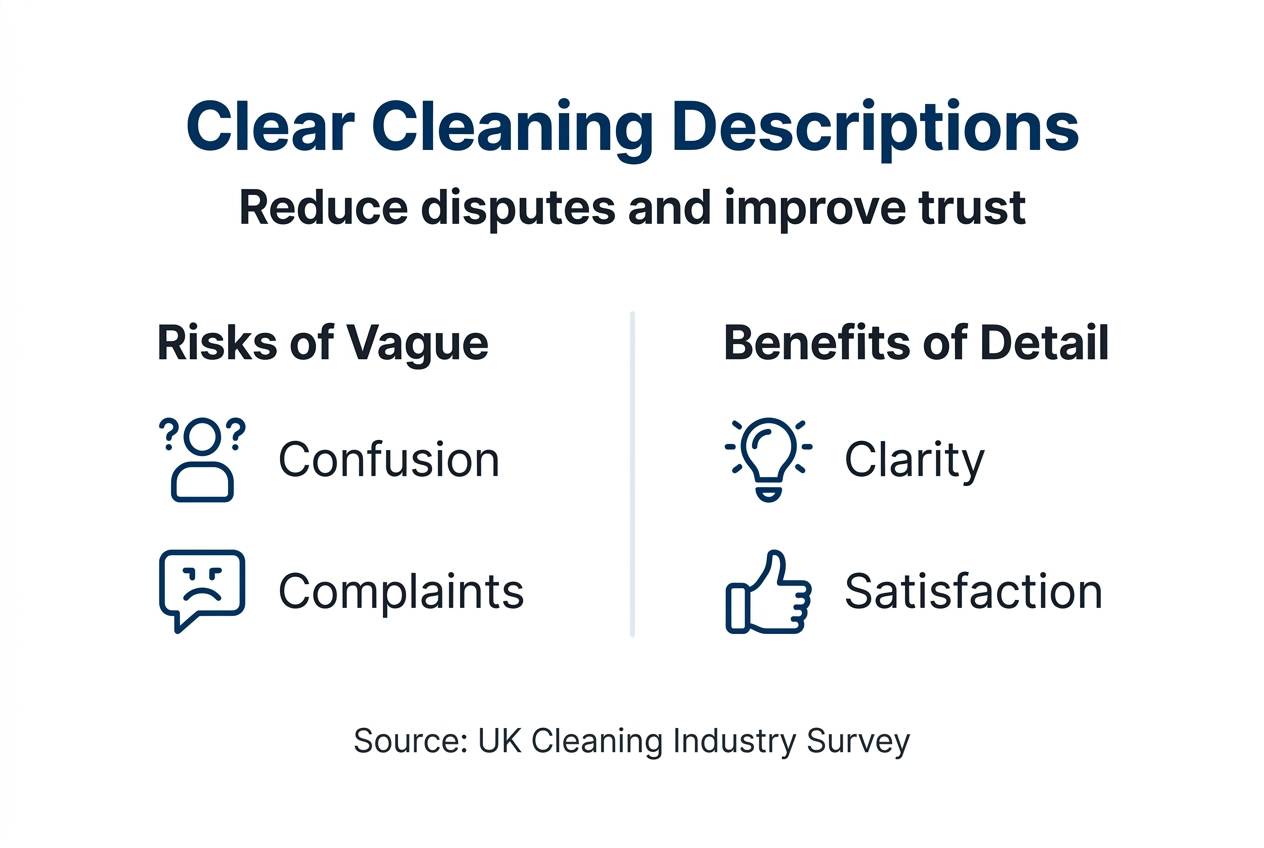
Consistent task details promote reliable service delivery and satisfaction. Clear job descriptions improve task consistency by over 30%. Cleaners working from detailed checklists deliver more uniform results across visits, meeting your standards repeatedly.
Common disputes that detailed descriptions prevent include:
- Unclear responsibilities about who cleans specific areas like hallways in shared buildings
- Unexpected extra charges for tasks clients assumed were included
- Quality disagreements when standards weren't explicitly defined
- Frequency misunderstandings about weekly versus fortnightly visits
For commercial cleaning services in Essex, these disputes disrupt business operations and damage provider relationships. Detailed descriptions act as reference points resolving conflicts quickly.
Consider this perspective from an Essex property manager:
"Since requiring detailed service descriptions from cleaning contractors, tenant complaints about cleaning quality dropped by half. Everyone knows exactly what's covered, and there's no room for assumptions."
This real-world outcome demonstrates how transparency benefits all parties. Tenants gain clarity, property managers reduce admin burden, and cleaning providers deliver consistent service without constant clarification requests.
Detailed descriptions also protect clients financially. When pricing links clearly to described tasks, you can compare quotes accurately. A cheap quote for vague services often costs more once hidden extras emerge. Transparent descriptions reveal true value.
Common misconceptions about cleaning service descriptions
Several widespread myths prevent people from properly evaluating cleaning service descriptions. Correcting these misunderstandings helps you make better choices.
Misconception: General or vague descriptions are enough. Many assume basic phrases like "thorough cleaning" or "professional service" suffice. However, these generic terms hide vast differences in actual tasks performed. Detail is essential to avoid dissatisfaction and ensure the service matches your needs.
Misconception: Price transparency alone builds trust. Whilst clear pricing matters, knowing costs without understanding what you're paying for leaves you vulnerable. Clear service scope is critical too. A low price for minimal tasks offers poor value compared to slightly higher pricing for comprehensive cleaning.
Misconception: All cleaning services cover the same tasks. Descriptions vary widely between providers. Some include oven cleaning and interior windows as standard; others charge extra or exclude them entirely. Check carefully rather than assuming uniformity across the industry.
Many underestimate how detailed scope reduces misunderstandings and improves satisfaction. They view descriptions as marketing fluff rather than functional agreements. This perspective leads to poor service selection and preventable conflicts.
Statistics support the importance of clarity. 40% of complaints in UK cleaning service sectors relate to unclear service scope or deliverables. This high percentage reveals how common these issues are and why attention to description quality matters.
Awareness of these misconceptions helps select more suitable cleaning providers. By prioritising detailed, specific descriptions over vague promises, you protect yourself from disappointment and ensure the service delivers what you expect.
Another common myth suggests that longer descriptions simply mean better marketing rather than better service. In reality, length alone doesn't indicate quality. Focus on specificity and comprehensiveness rather than word count. A concise, well-structured checklist often outperforms lengthy but vague paragraphs.
Understanding these misconceptions empowers you to ask better questions and evaluate providers more critically. Don't settle for generic descriptions when detailed alternatives exist.
Comparing cleaning service descriptions: what to look for
Evaluating different providers requires a systematic approach. Use these criteria to differentiate quality descriptions from inadequate ones.
Use checklists rather than vague task listings for full service scope. Checklists provide concrete, verifiable tasks you can review and approve. Look for inclusion of eco-friendly and specialty services to match needs, especially if sustainability or specific cleaning challenges matter to you.
Check clarity on deliverables and any client responsibilities. Some services require you to clear surfaces or provide cleaning supplies. Knowing this upfront prevents confusion on service day. Compare providers' frequency and duration details for planning. A two-hour weekly clean differs vastly from a four-hour fortnightly service, even at similar monthly costs.
| Criteria | High-quality description | Low-quality description |
|---|---|---|
| Task detail | Lists specific tasks like "dust all surfaces, vacuum carpets, mop hard floors, sanitise bathroom fixtures" | Uses vague phrases like "general cleaning" or "tidy up" |
| Exclusions | Clearly states what's not included, such as "exterior windows" or "inside cupboards" | Omits exclusions, leaving clients to discover gaps later |
| Frequency options | Offers multiple frequencies with adjusted pricing for each | Lists only one option without flexibility |
| Special services | Identifies add-ons like eco-friendly products, deep cleans, or specialist equipment | Makes no mention of customisation or special options |
| Quality standards | Describes cleaning methods and expected outcomes | Provides no detail on how tasks are performed |
| Client responsibilities | States any preparation required from the client | Assumes clients know what's expected without guidance |
This comparison table helps you quickly assess provider descriptions. High-quality descriptions demonstrate professionalism and accountability, whilst low-quality ones suggest potential issues.
Consider these additional factors:
- Transparency about pricing structure linked to specific tasks
- Mention of insurance and liability coverage
- References to staff training or vetting processes
- Flexibility for customisation based on property needs
Pro Tip: Choose providers who offer written confirmation or customised agreements rather than standard templates that don't reflect your specific requirements.
When comparing descriptions, pay attention to how providers communicate. Professional, clear language suggests attention to detail that likely extends to actual cleaning work. Confusing or poorly written descriptions often predict service quality issues.
Practical tips for homeowners, landlords, and property managers
Applying this knowledge when selecting cleaning services requires concrete steps. These practical tips help you choose confidently and protect your interests.
- Review descriptions for specific tasks and exclusions carefully. Don't skim. Read thoroughly and note any unclear points that need clarification before booking.
- Ask providers for checklists or written agreements before booking. Reputable companies readily provide detailed documentation. Hesitation or refusal signals potential issues.
- Verify transparency of pricing linked to described services. Ensure quotes reflect the full scope of work described. Hidden fees or vague pricing structures create problems later.
- Communicate service details clearly with tenants or stakeholders. If you manage properties, share cleaning descriptions with tenants so everyone understands what's covered and what responsibilities remain with them.
- Use detailed descriptions to negotiate better terms or customised service. When you understand exactly what's included, you can request specific adjustments matching your property's unique needs.
- Keep written records of agreed services for reference. Documentation protects you if disputes arise and provides a benchmark for evaluating service quality over time.
Clients who understand exactly what tasks are included in cleaning services report higher satisfaction and are 25% more likely to rebook from the same service provider. This statistic highlights how clarity benefits both parties.
For landlords coordinating end of tenancy cleaning tips, detailed descriptions become essential. They ensure properties meet inventory standards and prevent deposit disputes between outgoing tenants and incoming residents.
When exploring types of cleaning services in Essex, use descriptions to match services to your specific situation. A busy family needs different cleaning support than a property manager overseeing multiple rentals.
Pro Tip: Always keep a copy of the service description for reference after booking, either digitally or printed. This document serves as your agreement and quality benchmark throughout the service relationship.
Don't hesitate to ask questions if descriptions contain unfamiliar terms or unclear sections. Professional providers welcome clarification requests and view them as signs of engaged, informed clients. Your questions help them deliver better service by understanding your expectations precisely.
Finally, periodically review service descriptions if you've used a provider long-term. Standards and offerings evolve. Ensuring current services still match your needs prevents gradual service drift and maintains satisfaction.
Explore trusted cleaning services in Essex with detailed descriptions
Now that you understand the importance of detailed cleaning service descriptions, it's time to explore providers who prioritise transparency. Bansal's Cleaning offers clear, comprehensive descriptions for regular domestic cleaning services, deep cleaning services, and end of tenancy cleaning services across Essex.
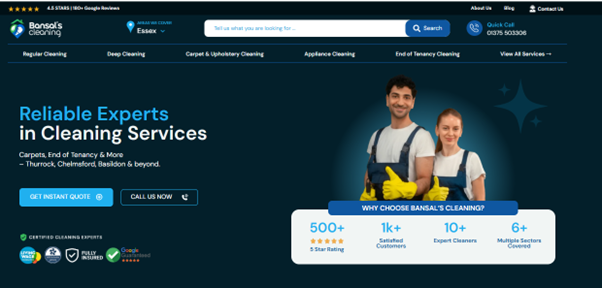
Their transparent descriptions ensure you know exactly what services you are booking, eliminating guesswork and building confidence. Each service page details specific tasks, frequency options, and quality standards, supporting your peace of mind and service satisfaction. Explore their service options to find one tailored to your Essex property needs, whether you're a homeowner seeking regular maintenance or a landlord preparing properties for new tenants.
Frequently asked questions
What makes a cleaning service description detailed?
A detailed description includes specific tasks, frequencies, exclusions, special services, and pricing transparency for clear client understanding. It defines exact scope and quality expectations, leaving no room for assumptions. Look for checklists naming individual tasks rather than vague promises.
How do detailed descriptions improve trust with cleaning providers?
They reduce uncertainty and enable informed decisions, making clients feel confident about their purchase. Transparency lowers risk of dissatisfaction and surprises, building a foundation for positive long-term relationships. When providers openly share what they do and don't do, it demonstrates integrity.
What should landlords check in cleaning service descriptions?
Verify inclusion of move-in and move-out tasks and damage reporting. Check for frequency, duration, and exclusions relevant to tenant turnover. Ensure descriptions cover property handover standards required by letting agreements. Clear documentation protects deposit returns and tenant relationships.
Can vague cleaning service descriptions lead to disputes?
Yes, vague or incomplete details often cause misunderstandings over scope and costs. Clear descriptions significantly reduce dispute likelihood by establishing shared expectations upfront. Around 40% of UK cleaning service complaints relate to unclear scope, making detailed descriptions essential for conflict prevention.
How can I verify a cleaning service description's accuracy before booking?
Request a written checklist or service agreement from the provider. Ask providers clarifying questions on unclear points before committing. Compare descriptions across providers for consistency and use reviews to confirm that services delivered match descriptions provided. Reputable companies willingly provide detailed documentation.
Recommended
- Types of cleaning services for Essex properties in 2026 - Bansals Cleaning
- Advantages of regular domestic cleaning for homes in Essex - Bansals Cleaning
- The Ultimate Guide to Professional House Cleaning Services in Essex - Bansals Cleaning
- Bansals Cleaning: Expert Cleaning Services in Essex
- Tile Regrouting Service Dubai for Stunning Surfaces
- Role of Sanitation in Pest Control Success